

The cheapest cities for remote workers in 2026 are not the ones most lists recommend — because most lists are written by people who visited for two weeks, not people who actually live there and pay rent.
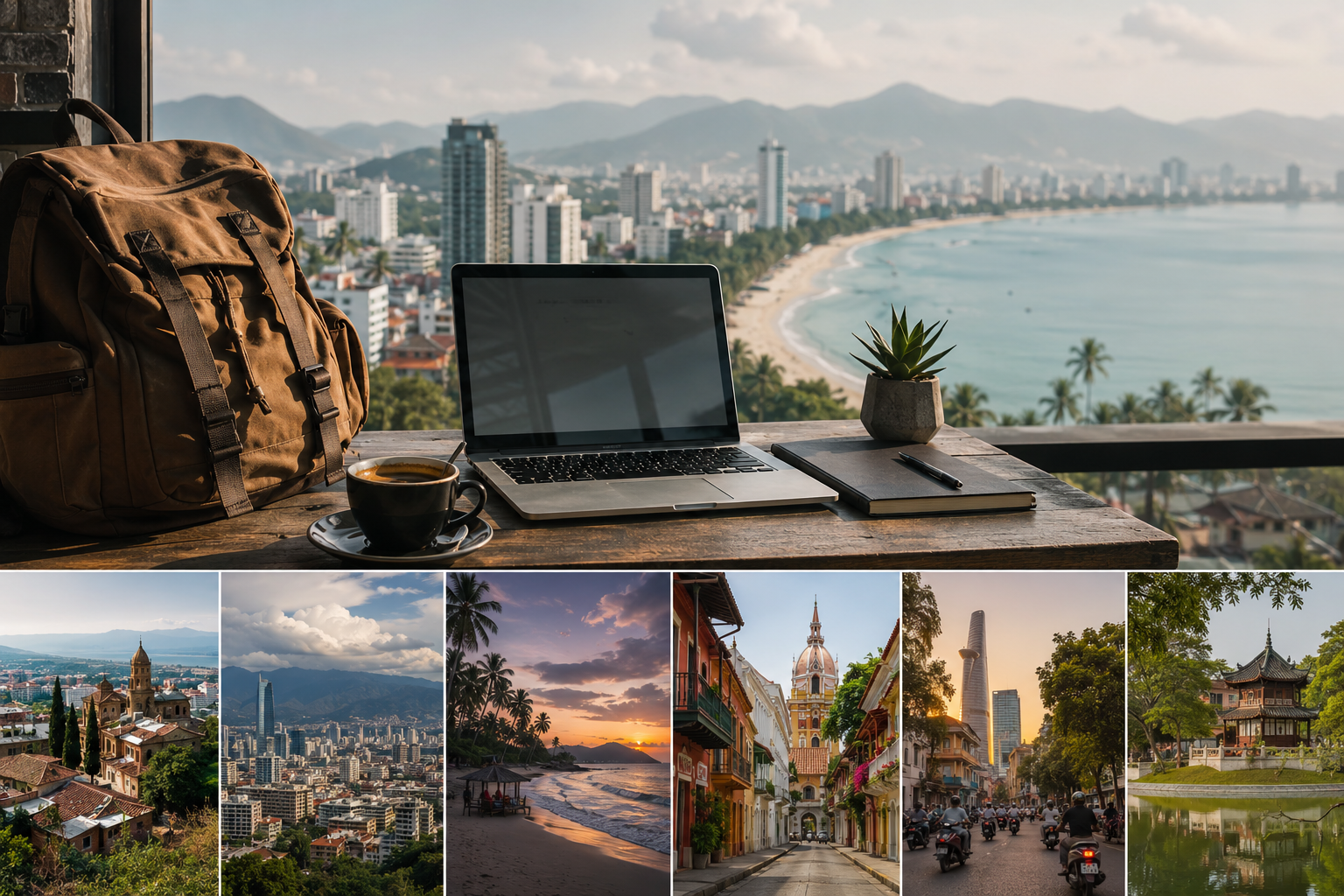
Here’s the problem with every “cheapest cities” list on the internet: the numbers are usually right, but the framing is almost always wrong.
They’ll tell you Chiang Mai costs $1,200/month for a comfortable life. True — in cool season, in a decent apartment, if you’re disciplined about going out. But what about burning season, when half the nomad population either leaves or spends $80/month on air purifiers? What about Medellín, where the “affordable” neighborhoods in the guides have become noticeably less affordable because of the nomad influx that followed those same guides?
The cheapest cities for remote workers in 2026 are still genuinely excellent value. The geo-arbitrage math still works dramatically in your favor if you earn in dollars, pounds, or euros and spend in local currency. But the honest picture requires knowing which cities are actually cheap vs. which ones used to be cheap and are now “affordable by Western standards.”
According to MBO Partners’ 2025 State of Independence study, there are now 18.5 million American digital nomads — up 153% since 2019. When that many people are chasing the same affordable cities, prices respond. The cities on this list are chosen specifically because they’re still genuinely cheap in 2026, not just historically cheap.
How We Define “Cheapest Cities for Remote Workers” (And Why It Matters)
A cheap city for a backpacker is different from a cheap city for a remote worker. The distinction matters enormously when you’re planning where to actually live and work.
Backpacker cheap means: hostel beds, street food only, no coworking, slow WiFi is fine, moving every week is normal.
Remote worker cheap means: private apartment with reliable AC, internet fast enough for video calls (50+ Mbps minimum), coworking or a viable café alternative, some semblance of a life beyond survival mode, and the ability to stay long enough for it to make financial sense.
Every city on this list is evaluated on that second definition — not the theoretical minimum, but what it actually costs to work remotely and live like a functional human being.
The four factors used to select each city:
- Comfortable monthly budget under $1,600 for a solo remote worker — private apartment, coworking or strong café WiFi, social life, insurance
- Internet quality — consistent 50+ Mbps available in apartments and coworking
- Visa viability — at least 90 days accessible without extreme complexity
- Real 2026 data — not numbers from 2022 blogs that haven’t been updated
The 10 Cheapest Cities for Remote Workers in 2026 — Real Monthly Costs
🥇 1. Da Nang, Vietnam — $950–$1,400/month
The verdict: Best overall value for remote workers in 2026.
Da Nang keeps appearing at the top of every serious nomad cost analysis because it earns it. Internet speeds regularly hit 90–200 Mbps in apartments. The beach is five minutes from most neighborhoods. Food is genuinely extraordinary at $1.50–$3 per meal. And it hasn’t yet been overwhelmed by the nomad influx the way Bali’s Canggu or Chiang Mai’s Nimman have.
| Category | Lean Budget | Comfortable Budget |
|---|---|---|
| Rent (1-bed) | $280–$380 | $400–$580 |
| Food | $180–$260 | $280–$420 |
| Coworking | $40–$80 | $80–$140 |
| Transport | $40–$65 | $60–$100 |
| Insurance + misc | $180–$240 | $230–$340 |
| Total | $720–$1,025 | $1,050–$1,580 |
| Internet quality | ⭐⭐⭐⭐⭐ — 90–200 Mbps typical in apartments | |
| Visa | 90-day e-visa ($25), extendable — no nomad visa yet | |
What makes it work: the combination of genuinely fast internet, beach access, excellent local food, and a growing but not yet oversaturated nomad community. My An and Phuoc My neighborhoods give you 15–20% cheaper rent than the tourist strip with the same beach.
Watch out for: the 3-month upfront deposit requirement for apartments (1–3 months rent), and the 183-day tax residency threshold if you’re planning a long stay. Full breakdown in our Vietnam cost of living guide.
“I’d been to Bali twice and kept hearing about Da Nang as the ‘cheaper version.’ That undersells it. Da Nang isn’t a cheaper Bali — it’s a different thing entirely. The food alone is a reason to be here. I spend $1,150/month and I’m not budgeting carefully. I just live normally and the number stays low.”
— Rachel, 30, remote content strategist, Da Nang
🥈 2. Chiang Mai, Thailand — $1,000–$1,600/month (Nov–Jan) / $900–$1,400 (May–Oct)
The verdict: Best nomad community and infrastructure at this price point — with a seasonal caveat.
Chiang Mai has been a top-ranked cheap city for remote workers for over a decade. The coworking ecosystem is world-class relative to cost. The food is extraordinary. The nomad community has depth and history that newer hubs haven’t built yet.
The honest caveat in 2026: burning season (February–April) makes Chiang Mai a place many experienced nomads actively leave. Air quality hits hazardous levels for weeks at a time. Budget $500–$1,000 for a temporary relocation if you’re there during this window — or plan your stay around it.
| Category | Lean Budget | Comfortable Budget |
|---|---|---|
| Rent (1-bed) | $280–$380 | $380–$560 |
| Food | $200–$300 | $300–$460 |
| Coworking | $50–$90 | $100–$170 |
| Transport | $60–$100 | $70–$130 |
| Insurance + misc | $160–$220 | $220–$340 |
| Total | $750–$1,090 | $1,070–$1,660 |
| Internet quality | ⭐⭐⭐⭐⭐ — 300–600 Mbps at coworking, fiber in most buildings | |
| Visa | 30-day visa-exempt + 30 extension, or DTV 5-year visa ($280, requires $16K/year income proof) | |
The Santitham neighborhood hack: same quality apartments as Nimman, 20–30% cheaper rent, 10-minute scooter ride to the main nomad strip. Most experienced Chiang Mai nomads live here, not in tourist-facing Nimman.
Full breakdown in our Thailand cost of living guide.
🥉 3. Tbilisi, Georgia — $900–$1,400/month
The verdict: The best-kept cheap city secret for remote workers in 2026 — but not for much longer.
Georgia has been quietly absorbing nomads who got priced out of or bored with Southeast Asia. Tbilisi offers European-style architecture, excellent wine culture, remarkable food, a surprisingly strong startup scene, and costs that still sit firmly in the cheap city for remote workers category.
The visa situation is extraordinary: most Western passport holders get 365 days visa-free. No visa runs. No applications. Just land and stay.
| Category | Lean Budget | Comfortable Budget |
|---|---|---|
| Rent (1-bed) | $280–$420 | $420–$650 |
| Food | $180–$260 | $260–$400 |
| Coworking | $60–$100 | $100–$160 |
| Transport | $30–$60 | $50–$90 |
| Insurance + misc | $160–$220 | $210–$320 |
| Total | $710–$1,060 | $1,040–$1,620 |
| Internet quality | ⭐⭐⭐⭐ — Generally 50–150 Mbps, fiber available in most buildings | |
| Visa | 365-day visa-free for most Western passports — best visa situation on this list | |
Watch out for: Tbilisi has gotten noticeably more expensive since 2022 as it absorbed an influx of Russian expats alongside nomads. Prices in the Vera and Vake neighborhoods (most popular with foreigners) have risen 30–40% since 2022. Saburtalo and Gldani offer the same city with significantly lower rent.
“The visa situation in Georgia is what sold me. 365 days, no application, no fees, no extension trips. I can actually plan my year without a visa calendar. That alone changes how you live — you stop optimizing everything around departure dates and just… live. The cost is basically the same as Chiang Mai but without burning season and without the complex visa math.”
— Oliver, 34, freelance developer, Tbilisi
4. Medellín, Colombia — $1,100–$1,700/month
The verdict: The best value in Latin America — but prices have risen. Time your move carefully.
Medellín earned its reputation as a remote worker paradise for good reason: eternal spring climate (~22°C year-round), genuine cultural richness, world-class coffee, and fast internet. The city has transformed dramatically over the past decade and is now one of the most liveable cities in South America.
The honest 2026 update: Medellín has gotten more expensive. The El Poblado neighborhood — featured in every digital nomad guide — now costs Bali-level rent for equivalent apartments. The nomad tax is real here. The smart move is Laureles or Envigado — same city, 25–40% cheaper rent, better local life.
| Category | Lean Budget | Comfortable Budget |
|---|---|---|
| Rent (1-bed) | $350–$500 | $500–$750 |
| Food | $220–$320 | $320–$500 |
| Coworking | $80–$130 | $130–$200 |
| Transport | $40–$70 | $60–$110 |
| Insurance + misc | $180–$250 | $230–$350 |
| Total | $870–$1,270 | $1,240–$1,910 |
| Internet quality | ⭐⭐⭐⭐ — 100–300 Mbps in apartments, excellent in coworking | |
| Visa | 90-day tourist visa, extendable to 180 days at migration office ($50) | |
Time zone advantage: Medellín runs UTC-5 year-round (Colombia doesn’t observe daylight saving). This gives you morning overlap with US East Coast clients without the extreme early-morning calls that Asia time zones require for US work.
5. Ho Chi Minh City, Vietnam — $1,100–$1,700/month
The verdict: Best city for building remote income while keeping costs low.
HCMC (Saigon) is the business-forward version of Vietnam’s nomad scene. More expensive than Da Nang but cheaper than Bangkok, with better professional networking opportunities and a startup ecosystem that’s increasingly active. For nomads who need client meetings, coworking culture, or business development — HCMC has an energy that quieter hubs lack.
District 7 and Binh Thanh are where the best cost-to-quality rent exists in 2026 — both have fast internet, good coworking proximity, and 20–30% lower rents than District 1.
| Category | Lean Budget | Comfortable Budget |
|---|---|---|
| Rent (1-bed) | $380–$520 | $520–$750 |
| Food | $220–$340 | $340–$520 |
| Coworking | $80–$140 | $140–$200 |
| Transport | $50–$90 | $80–$130 |
| Insurance + misc | $180–$260 | $240–$360 |
| Total | $910–$1,350 | $1,320–$1,960 |
| Internet quality | ⭐⭐⭐⭐⭐ — Among the fastest in Southeast Asia | |
| Visa | 90-day e-visa ($25) | |
6. Hanoi, Vietnam — $900–$1,400/month
The verdict: Cheapest of Vietnam’s major cities — with the richest cultural depth.
Hanoi is consistently the cheapest of Vietnam’s three main nomad cities, and it’s genuinely underrated in the English-language nomad content world. The old quarter is extraordinary — but the nomad-smart move is Tay Ho (West Lake area) for a reasonable cost with a strong expat community, or Cau Giay for 20–30% cheaper than Tay Ho with solid infrastructure.
The trade-off vs. Da Nang: no beach, more intense traffic, and Hanoi’s air quality in winter can be poor. The advantages: lower costs, richer cultural experience, and a cafe culture that’s arguably the best in Vietnam.
| Category | Budget Range |
|---|---|
| Rent (1-bed, good area) | $280–$480 |
| Food (mix local/café) | $200–$360 |
| Coworking | $80–$160 |
| All other expenses | $280–$450 |
| Total comfortable | $840–$1,450 |
7. Canggu/Bali, Indonesia — $1,600–$2,400/month
The verdict: Still worth it for community — but no longer the “cheap” option it used to be.
Listing Bali here comes with a significant asterisk: Canggu is no longer cheap by Southeast Asian standards. Rent for a decent 1-bedroom in Berawa or Echo Beach runs $600–$900/month — approaching Lisbon territory. The nomad community is the strongest in the world, the infrastructure is excellent, the lifestyle is exceptional. But the cost has caught up.
If you want Bali at lower cost: Pererenan (10 minutes from Canggu) or Ubud. Both offer the same quality of life at 25–40% lower rent. The comfortable budget in these areas sits at $1,600–$2,000 rather than the $2,000–$2,600 of central Canggu.
Full breakdown: our complete Bali cost of living guide.
8. Lisbon, Portugal — $1,700–$2,600/month
The verdict: The best cheap city for remote workers who need EU access — but barely qualifies as “cheap” anymore.
Including Lisbon here is controversial because it’s genuinely the most expensive city on this list. But relative to the rest of Western Europe — and considering what it offers (EU freedom of movement for EU passport holders, excellent infrastructure, gorgeous city, strong nomad community) — it still represents real value.
The Lisbon caveat: rent has risen dramatically since 2020. The “€800/month apartment in Lisbon” guide articles are mostly outdated. Realistic 1-bedroom rent in a decent area is €1,100–€1,600 ($1,200–$1,750). The way to make Lisbon’s numbers work: go to Almada or Setúbal (30-minute ferry or train), which cut rent 35–50% vs. central Lisbon with a manageable commute.
| Category | Budget Range |
|---|---|
| Rent (1-bed central) | $1,200–$1,750 |
| Food + going out | $400–$650 |
| Coworking + transport + misc | $350–$550 |
| Total | $1,950–$2,950 |
9. Mexico City, Mexico — $1,300–$2,000/month
The verdict: The best US time zone option for remote workers with American clients.
Mexico City is the obvious choice for North American remote workers who need overlap with US time zones. The city is enormous, cultural, excellent food and nightlife, improving coworking infrastructure, and costs that are meaningfully lower than any comparable city in the US.
The honest 2026 update: Roma Norte and Condesa — the most-discussed nomad neighborhoods — have seen significant rent increases due to tech worker and nomad influx. The smart move in 2026 is Cuauhtémoc, Doctores, or Narvarte — cheaper rent, genuine Mexico City life, easy metro access to the trendy areas when you want them.
| Category | Budget Range |
|---|---|
| Rent (1-bed, non-tourist area) | $500–$900 |
| Food + going out | $300–$520 |
| Coworking + transport + misc | $300–$500 |
| Total comfortable | $1,100–$1,920 |
10. Playa del Carmen, Mexico — $1,200–$1,900/month
The verdict: Beach lifestyle at non-island prices with US time zone alignment.
Playa del Carmen offers something rare on this list: Caribbean beach access, strong nomad community, fast internet, and costs that are meaningfully lower than the equivalent beach lifestyle in Thailand’s islands or Bali. The Quinta Avenida (5th Avenue) tourist strip is expensive — everything off it is dramatically cheaper.
The coworking scene is solid. Internet in apartments runs 50–150 Mbps consistently. The 180-day tourist visa covers most stays. And the US-aligned time zone means you can have client calls in the morning and be on the beach by 3pm.
The Master Comparison Table: All 10 Cities Side by Side
| City | Lean Budget | Comfortable Budget | Internet | Visa Max | Best For |
|---|---|---|---|---|---|
| Da Nang, Vietnam | $720 | $1,100–$1,500 | ⭐⭐⭐⭐⭐ | 90 days | Best all-round value |
| Chiang Mai, Thailand | $750 | $1,100–$1,600 | ⭐⭐⭐⭐⭐ | 60 days + DTV | Best community |
| Tbilisi, Georgia | $710 | $1,050–$1,550 | ⭐⭐⭐⭐ | 365 days | Best visa deal |
| Medellín, Colombia | $870 | $1,250–$1,800 | ⭐⭐⭐⭐ | 180 days | Best Latin America |
| Ho Chi Minh City, Vietnam | $910 | $1,300–$1,900 | ⭐⭐⭐⭐⭐ | 90 days | Best for income growth |
| Hanoi, Vietnam | $840 | $900–$1,450 | ⭐⭐⭐⭐⭐ | 90 days | Cheapest + richest culture |
| Bali (non-Canggu) | $1,100 | $1,600–$2,200 | ⭐⭐⭐⭐ | 60 days + ext. | Best lifestyle/community |
| Lisbon, Portugal | $1,700 | $2,000–$2,800 | ⭐⭐⭐⭐⭐ | EU/Schengen 90/180 | Best Europe option |
| Mexico City, Mexico | $1,100 | $1,300–$1,900 | ⭐⭐⭐⭐ | 180 days | Best US time zone |
| Playa del Carmen, Mexico | $1,000 | $1,200–$1,800 | ⭐⭐⭐⭐ | 180 days | Best beach + US hours |
The Geo-Arbitrage Math: What These Cheap Cities Actually Mean for Your Income
This is the calculation most cheapest cities for remote workers articles skip entirely. The city costs matter — but they only matter in context of what you earn.
Geo-arbitrage in plain terms: if you earn in a strong currency (USD, GBP, EUR) and spend in a weaker local currency, every dollar of income goes further. The gap between your earning currency and your spending currency is your arbitrage. It’s why a $3,000/month remote income feels like $8,000 in Da Nang and feels like $3,000 in San Francisco.
| Monthly Income | Da Nang savings | Chiang Mai savings | Medellín savings | Lisbon savings |
|---|---|---|---|---|
| $1,500/mo | $200–$500 | $100–$400 | $0–$300 | ❌ Not viable |
| $2,500/mo | $1,000–$1,500 | $900–$1,400 | $700–$1,200 | $0–$500 |
| $4,000/mo | $2,500–$3,000 | $2,400–$2,900 | $2,100–$2,700 | $1,200–$2,000 |
The savings rate at $2,500/month income in Da Nang — $1,000–$1,500/month saved — represents a 40–60% savings rate. That same income in London or New York leaves most people with nothing saved.
That’s the geo-arbitrage argument in a single table. The cheapest cities for remote workers aren’t just cheaper places to live — they’re wealth-building environments that are fundamentally unavailable to people working the same jobs in Western cities.
Cost Inflation Warning: Which “Cheap” Cities Are Getting Expensive Fast
Not all cheap cities stay cheap. This is the section most “cheapest cities” lists don’t write because it requires acknowledging that their own recommendations drive the inflation.
Cities where costs have risen significantly since 2022:
- Canggu, Bali — rent up 40–60% since 2019. No longer genuinely affordable by SEA standards. Alternative: Pererenan, Ubud
- El Poblado, Medellín — rent up 30–50% since 2021. Alternative: Laureles, Envigado
- Nimman, Chiang Mai — rent up 20–30% since 2022 peak nomad influx. Alternative: Santitham, Suthep
- Tbilisi center — up 30–40% since 2022 Russian expat influx. Alternative: Saburtalo, Gldani
- Roma Norte, Mexico City — rent up 35–50% since 2021 tech worker migration. Alternative: Cuauhtémoc, Narvarte
Cities that are genuinely underpriced in 2026 (for now):
- Da Nang, Vietnam — still very reasonably priced relative to what it offers, growing slower than Bali or Medellín
- Hanoi, Vietnam — one of the few major nomad cities where 2026 prices are still close to 2022 prices
- Tbilisi non-tourist neighborhoods — Saburtalo and Gldani remain genuinely cheap even as Vera and Vake inflate
- Ho Chi Minh City Districts 7 and Binh Thanh — off the tourist map, much cheaper than District 1
⚠️ The nomad paradox: every time a city appears on a “cheapest cities for remote workers” list, it becomes slightly less cheap. The cities that are genuinely affordable in 2026 are often the ones that weren’t heavily featured in 2023 lists. Pay attention to this dynamic when you see somewhere described as an “emerging” nomad hub — it may be cheap now, but the clock is ticking.
Choosing Your City: The Decision Framework
Run through these four questions before you pick:
- What time zone do your clients or employer require? — US clients = Latin America or Mexico. EU clients = Eastern Europe, Georgia, Portugal. Asian markets = Southeast Asia. This alone eliminates most options.
- How long can you legally stay without complexity? — Georgia (365 days), Mexico (180 days), Vietnam (90 days extendable), Thailand (60 days + DTV option). If you want to stay 6+ months without visa runs, Georgia or Thailand DTV are the answers.
- What’s your minimum income and what savings rate do you need? — Under $2,000/month income: Southeast Asia only. $2,000–$3,500: Southeast Asia or Latin America. $3,500+: any city on this list works.
- Community or cost? — If community is the priority, Chiang Mai and Bali still lead. If cost is the priority with decent community, Da Nang and Tbilisi are the 2026 answers.
🔑 The rule that saves people from expensive mistakes: never choose a city for the lifestyle content you’ve seen online. Choose it for the specific combination of time zone, visa length, budget, and community that matches your actual situation. The “best” cheap city for remote workers doesn’t exist in the abstract — it only exists relative to your income, your clients, and how long you want to stay.
Final Thoughts: The Cheapest Cities for Remote Workers in 2026 Are Still Extraordinary Value
The geo-arbitrage opportunity hasn’t gone away. It’s actually stronger for high earners in 2026 than it was in 2019, because remote work income has grown faster than costs in most of these cities.
The nuance is that the easy answers — Canggu, El Poblado Medellín, central Chiang Mai — are no longer the cheapest version of themselves. The smart move in 2026 is either going one neighborhood deeper in established hubs (Santitham over Nimman, Pererenan over Berawa, Laureles over El Poblado) or looking seriously at Da Nang and Tbilisi, which remain genuinely cheap and haven’t yet absorbed the full nomad premium.
The cheapest cities for remote workers are still there. They’re just slightly different streets than three years ago.
For deeper cost breakdowns by destination, check our complete guides on Vietnam, Thailand, and Bali. And our Digital Nomad Budget breakdown from 53 real nomads puts all of these city costs into the context of how working nomads actually manage their money.
Want honest destination guides, real monthly budgets, and nomad finance strategies that actually work?
No inflated numbers. No 2019 data with a 2026 title. Just what it actually costs — weekly.
Related Articles:
- Cheap Countries for Digital Nomads 2026: Real Budgets & Visa Truth
- Digital Nomad Budget 2026: Real Costs from 53 Nomads
- Cost of Living in Vietnam for Digital Nomads 2026
- Cost of Living in Thailand for Digital Nomads 2026
- Cost of Living in Bali for Digital Nomads 2026
- Digital Nomad Jobs No Experience: Realistic 90-Day Roadmap
- Slow Travel on a Budget: Why Staying Longer Saves More
- Remote Work Travel Guide: Everything You Need to Know
