

The cost of living in Thailand for digital nomads is genuinely exceptional — but only if you know which city to pick, which months to avoid, and what the DTV visa actually requires.
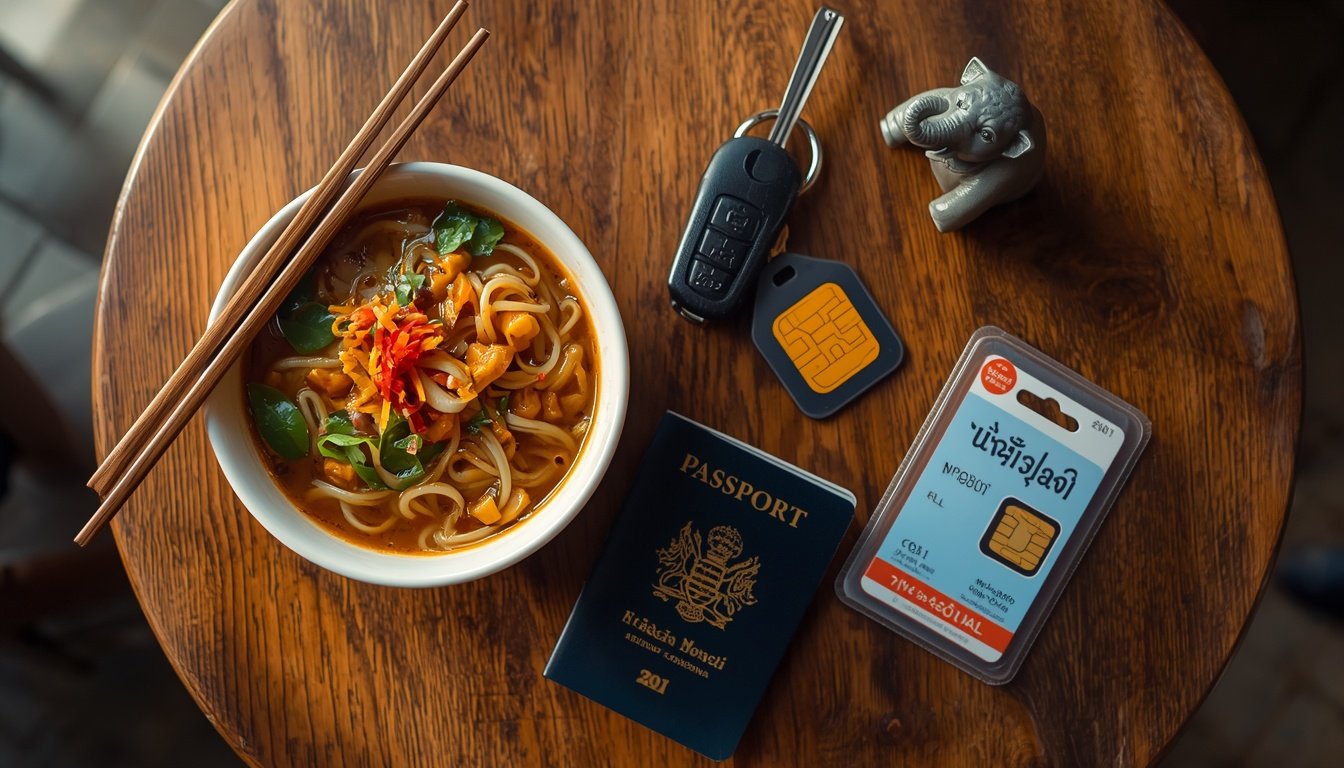
Thailand has been a digital nomad destination since before the term “digital nomad” existed. Chiang Mai in particular has been the go-to base for remote workers for well over a decade — and for good reason. The combination of affordability, internet quality, food, community, and lifestyle is legitimately hard to match.
But the cost of living in Thailand for digital nomads in 2026 is more complicated than the standard guides suggest. Because Thailand is four completely different financial realities depending on where you land and when.
Chiang Mai during cool season (November–February) is arguably the best value in Southeast Asia for a working nomad. Chiang Mai during burning season (February–April) is a place many experienced nomads actively leave — because the air quality is genuinely bad, not just inconvenient. Bangkok is excellent but noticeably more expensive. The islands are beautiful and pricier still, with infrastructure trade-offs that matter if you’re actually working.
And then there’s the DTV — Thailand’s Destination Thailand Visa, launched in June 2024 and still causing confusion in 2026. It’s genuinely one of the best long-stay visa options in the world if you meet the requirements. The requirements are where people get caught out.
This guide covers all of it. Real budgets, real city comparisons, the DTV explained properly, and the specific things other Thailand guides don’t tell you — like what burning season actually costs nomads who stay, and where the alcohol tax shows up in your monthly spend.
Why the Cost of Living in Thailand Varies So Dramatically by City
Thailand is not one price. It’s at least four — and the gap between them is significant.
The four Thailand nomad realities in 2026:
Chiang Mai is the value play — the cheapest of the major hubs, the strongest established nomad community, and the best lifestyle-to-cost ratio in the country. The downside is real: burning season air quality is some of the worst in the world, and the airport has limited international connections.
Bangkok is the infrastructure play — best international airport hub, world-class BTS/MRT transit system, serious networking and professional scene, excellent food. It’s also 30–40% more expensive than Chiang Mai for rent and noticeably pricier for going out.
Phuket and Koh Samui are the beach play — beautiful, functional, with improving coworking infrastructure. They cost more than Chiang Mai, less than central Bangkok, and come with the island trade-off: getting on and off requires a flight or a long ferry, which compounds over time.
Koh Phangan is the wellness/vibe play — improving WiFi (some spaces hitting 100–300 Mbps), a strong yoga and wellness community, genuinely beautiful. Infrastructure is the weakest of the four. Fine for a month; frustrating for a longer haul.
City-by-City Cost Comparison: The Real Thailand Numbers
| Category | Chiang Mai | Bangkok | Phuket | Koh Phangan |
|---|---|---|---|---|
| Rent (1-bed, good area) | $280–$540 | $420–$900 | $400–$900 | $300–$700 |
| Food (mix local + café) | $250–$400 | $300–$500 | $300–$550 | $280–$500 |
| Coworking (monthly) | $70–$165 | $100–$200 | $90–$180 | $80–$150 |
| Transport | $60–$120 | $60–$130 | $70–$150 | $60–$120 |
| Entertainment | $150–$280 | $200–$400 | $200–$450 | $180–$350 |
| Comfortable total | $1,000–$1,600 | $1,500–$2,500 | $1,400–$2,500 | $1,200–$2,000 |
| Internet quality | ⭐⭐⭐⭐⭐ | ⭐⭐⭐⭐⭐ | ⭐⭐⭐⭐ | ⭐⭐⭐ |
| Nomad community | ⭐⭐⭐⭐⭐ | ⭐⭐⭐⭐ | ⭐⭐⭐ | ⭐⭐⭐ |
| Air quality (year-round) | ⭐⭐⭐ (Feb–Apr: ⭐) | ⭐⭐⭐ | ⭐⭐⭐⭐ | ⭐⭐⭐⭐⭐ |
The Chiang Mai numbers in that table assume cool season. During burning season (roughly February through April), add $40–$80/month for air purifiers, masks, and the cost of the health impacts that come with sustained bad air. Some nomads add an extra $150–$300 for a temporary relocation flight to escape the smoke — more on this below.
The Four Budget Tiers: Real Cost of Living in Thailand in 2026
💸 Ultra-Frugal Tier — Thailand Under $800/Month
Most cost guides skip this tier entirely or claim it doesn’t exist. It does — but it requires specific trade-offs that are worth understanding before you commit.
Average: around $700–$750/month in Chiang Mai
| Category | THB/month | USD/month | What This Means |
|---|---|---|---|
| Rent (coliving or shared) | ฿7,000–฿9,500 | $195–$265 | Shared 2-bed apartment, coliving bunk, or budget guesthouse monthly rate |
| Food | ฿5,500–฿7,000 | $155–$195 | Almost entirely street food and local rice plates — 40–80 THB per meal |
| Transport | ฿1,800–฿2,500 | $50–$70 | Old scooter rental, minimal Grab |
| Coworking | ฿0–฿1,800 | $0–$50 | CAMP café (฿50 minimum spend for WiFi) or café rotation only |
| Insurance | ฿1,600–฿2,400 | $45–$68 | SafetyWing starter — do not skip even at this tier |
| SIM + utilities | ฿300–฿540 | $8–$15 | AIS or True Move unlimited data, cheap and reliable |
| Miscellaneous | ฿2,500–฿3,500 | $70–$98 | Laundry, toiletries, rare social spending, small surprises |
The trade-offs are real. Shared housing means no guaranteed privacy. Café-only working without a coworking membership means no dedicated desk, inconsistent AC, and limited community. No bar nights — Thailand’s alcohol tax makes even moderate drinking expensive at this tier.
What makes it work: Thailand’s street food is genuinely excellent at 40–80 THB ($1.10–$2.20) per meal. Local rice plates, pad thai, som tam, khao man gai — you can eat well every day for $5–$7 total. The trade-off isn’t food quality. It’s everything else.
This tier works best as a temporary phase — building income, testing Thailand, or doing a deliberate 2–3 month savings sprint. Most nomads who stay in Thailand long-term move up to the lean or comfortable tier within 6 months.
⚠️ Sub-฿25,000/month ($700) requires one specific thing: shared accommodation. Private studios in Chiang Mai start at $280–$300/month — that alone is 40–43% of a $700 budget. Finding a shared 2-bedroom in Santitham or Suthep at $150–$180/person is the single biggest lever at this tier. Facebook groups “Chiang Mai Expat Housing” and “Chiang Mai Rent, Buy, Sell” are where these listings appear.
🌿 Lean Tier — Budget Thailand ($800–$1,200/month)
Achievable, especially in Chiang Mai. This is not a suffering budget in Thailand. It’s strategic and requires specific choices, but the lifestyle is genuinely good.
Average: around $1,000/month in Chiang Mai
| Category | Monthly Cost | What This Looks Like |
|---|---|---|
| Rent | $280–$380 | Studio or small 1-bed in Santitham or outer Nimman, local building |
| Food | $220–$320 | Street food most meals, khao soi, pad thai, som tam — all excellent at $1.50–$3 |
| Transport | $60–$100 | Scooter rental $70–$90/month + fuel, occasional Grab |
| Coworking (day passes) | $50–$90 | Mix of CAMP (Maya café — free WiFi with 50 THB purchase), day passes at Punspace |
| Entertainment | $100–$180 | Temple visits, hiking, Sunday Walking Street, occasional bar night |
| Insurance (basic) | $45–$70 | SafetyWing starter — Thailand’s private hospitals are excellent, worth it |
| SIM + data | $8–$15 | AIS or True Move unlimited data plans, widely available |
| Miscellaneous | $100–$180 | Laundry, toiletries, the occasional massage ($8–$12), small surprises |
The lean tier in Chiang Mai works largely because the food is so good and so cheap. Khao soi — the city’s signature coconut curry noodle soup — costs $1.50–$2.50 at a local shop. It’s one of the best dishes in Southeast Asia. Eating local here isn’t a budget compromise, it’s the actual point.
“I budgeted $1,200 for my first month in Chiang Mai and spent $940. The food thing people talk about is real — I was genuinely eating better than I did in London, for a fifth of the cost. The only adjustment was going out at night. Thailand’s alcohol tax is brutal. Two beers at a bar cost more than my entire dinner. I moved most social time to morning coffee spots and the budget was fine.”
— James, 28, remote copywriter, Chiang Mai
☕ Comfortable Tier — The Thailand Sweet Spot ($1,200–$2,000/month)
Where most working nomads settle after the first month of adjustment. You’ve got a proper apartment, real coworking, good internet, and freedom to enjoy Thailand without checking prices constantly.
Average: around $1,450/month in Chiang Mai, $1,900/month in Bangkok
| Category | Monthly Cost | What This Looks Like |
|---|---|---|
| Rent | $380–$650 | Modern 1-bed in Nimman (CM) or good Bangkok district, pool building, reliable AC + WiFi |
| Food | $300–$480 | Good mix of street food, local restaurants, and Western cafés — not tracking it |
| Transport | $70–$140 | Scooter + Grab; Bangkok: BTS/MRT + Grab, no scooter needed |
| Coworking (membership) | $100–$180 | Punspace or Yellow Coworking (CM), The Hive or Hubba (Bangkok) |
| Entertainment / trips | $200–$350 | Weekend trips, Muay Thai classes, night markets, occasional island flight |
| Insurance | $75–$110 | SafetyWing Remote Health or Cigna — Thailand’s hospitals are excellent |
| Wellness / gym / yoga | $60–$130 | Yoga classes $5–$8 each, Muay Thai $40–$80/month at a gym, massages $8–$15 |
| Miscellaneous | $150–$260 | Toiletries, random spending, the things you didn’t plan for |
This is the tier where the cost of living in Thailand for digital nomads reveals its real value. $1,450/month in Chiang Mai buys a life that would cost $4,000+ in London, Sydney, or New York. Pool apartment, coworking community, Muay Thai training, weekend mountain trips — all of it at a price most Western salaries can sustain comfortably while saving aggressively.
“Three years in Thailand — two in Chiang Mai, one in Bangkok. The Chiang Mai number is $1,350/month average and I live well. The Bangkok year cost me $1,900 average. The lifestyle difference wasn’t $550 worth better. I’m back in Chiang Mai. If I need city energy I fly to Bangkok for 3 days. $40 flight. Problem solved without paying Bangkok rent every month.”
— Maria, 33, remote product designer, Chiang Mai
🏙️ Premium Tier — Thailand Without Compromise ($2,000–$3,500+/month)
Established earners, couples, people who’ve done the budget thing and now want comfort over optimization. In Bangkok especially, this tier unlocks genuinely world-class living.
Average: around $2,400/month in Bangkok, $2,000/month in Chiang Mai
| Category | Monthly Cost | What This Looks Like |
|---|---|---|
| Rent (premium apartment) | $800–$1,500 | High-floor condo, rooftop pool, Sukhumvit Bangkok or top Nimman CM |
| Food | $500–$800 | Eating out freely, nice restaurants, rooftop bars — Bangkok’s food scene is extraordinary |
| Transport | $120–$250 | BTS monthly pass + Grab freely; scooter + car bookings in CM |
| Coworking / private desk | $180–$350 | Premium memberships or dedicated setups with private offices |
| Entertainment / island trips | $400–$700 | Weekend flights to Koh Samui, Phuket, or nearby countries, nightlife |
| Insurance (international) | $120–$200 | Full international coverage — worth it at this tier |
| Wellness + everything else | $300–$500 | Personal trainer, spa days, regular Muay Thai, household help |
🔑 The Thailand premium paradox: Even at $2,400/month in Bangkok — the premium tier — you’re living at a level that would cost $5,000–$7,000 in Singapore, Tokyo, or Sydney. High-floor condo, world-class food scene, Muay Thai gym, rooftop bars, international airport connections. The value at every tier of the cost of living in Thailand for digital nomads is genuinely difficult to match elsewhere at this lifestyle level.
Category-by-Category: What Costs What in Thailand
🏠 Rent — The Biggest Variable
Range: $280 – $1,500+/month
Thailand’s rental market has a useful quirk: monthly rates on condos in most cities are negotiable for longer stays. A unit listed at $500/month often rents for $420–$440 if you commit to 6 months, or $380–$400 on a 12-month lease. This is worth asking about directly with the landlord or building manager — not through an agent who has no incentive to negotiate down.
Best neighborhoods by city:
- Chiang Mai: Nimmanhaemin for the full nomad scene; Santitham for 20–30% cheaper rent with easy scooter access; Old City for walkable charm at mid-range prices
- Bangkok: Sukhumvit for BTS access and international feel; Silom/Sathorn for business district energy; outer suburbs like Bang Na or Lat Phrao for 30–40% cheaper rent with still-decent transit access
- Phuket: Rawai or Nai Yang for local pricing away from tourist zones; Patong for convenience but expect a 30–50% premium
Deposit requirements: typically two months’ rent in Thailand, not three like Vietnam. Still budget for it upfront — $600–$1,000 cash requirement at signing depending on the apartment.
⚠️ Chiang Mai during high season (Nov–Feb): prices jump. Demand for good Nimman apartments from November through February is high — the cool season is peak time and prices reflect it. If you’re arriving in this window, book accommodation 3–4 weeks in advance rather than assuming you can find something good on arrival. The opposite applies in shoulder season: great deals available, especially for 3–6 month commitments.
🍜 Food — Extraordinary at Every Price Point
Range: $200 – $800+/month
Thai street food is world-famous for a reason. A plate of pad thai from a street cart costs 50–80 THB ($1.40–$2.20). Khao soi, the northern Thailand coconut curry noodle dish, runs 60–90 THB ($1.70–$2.50) at a local shop. Som tam, mango sticky rice, grilled chicken — all $1–$3.
The café scene in Chiang Mai and Bangkok is genuinely outstanding — locally-owned specialty coffee shops, excellent brunch spots, rooftop restaurants. You can spend $8–$15 on a nice lunch without any guilt. These places also tend to be strong WiFi environments for working.
The one category that breaks the Thai food budget narrative: alcohol. Thailand’s alcohol taxes are high — higher than most people expect from a country otherwise this cheap. A Chang or Singha beer at a bar costs 80–120 THB ($2.20–$3.30). A cocktail at a decent bar is 200–350 THB ($5.50–$9.80). If you drink regularly and socialize at bars, your monthly food and entertainment budget can run 40–60% higher than the “Thailand is cheap” reputation suggests.
“Nobody told me about the alcohol thing before I came. I’m not even a heavy drinker — maybe 3–4 beers on a Friday. But in Thailand that costs the same as my entire Friday dinner. I shifted social time to coffee meetups in the mornings and the budget difference was around $120/month. Not huge but real.”
— Tom, 26, freelance developer, Bangkok
🛵 Transport — Scooter in Chiang Mai, BTS in Bangkok
Range: $50 – $250/month
Transport strategy differs completely by city. In Chiang Mai, a scooter is essential — the city is not walkable, distances between neighborhoods require wheels, and Grab adds up fast if it’s your only option. Monthly scooter rental runs $70–$90 for a decent bike, fuel adds $10–$15.
In Bangkok, the opposite: the BTS Skytrain and MRT underground system make getting around central Bangkok comfortable and cheap. A monthly BTS pass runs about $40–$60 depending on zones. Add Grab for off-BTS destinations and you’re at $60–$130/month total without touching a scooter.
💻 Coworking — Thailand’s Strongest Asset for Nomads
Range: $0 – $350/month
Chiang Mai has one of the most developed coworking ecosystems in the world relative to its size. Punspace (multiple locations), Yellow Coworking (24/7 access, $190/month), CAMP at Maya Mall (essentially free with a $1.40 coffee purchase), and dozens of specialty cafés doubling as workspaces with 50–200 Mbps WiFi.
The community inside these spaces is real and established. Chiang Mai has been a nomad hub for 10+ years — the network effects are visible. Referrals happen, collaborations start, friendships form. This is meaningfully different from newer nomad destinations where the coworking exists but the critical community mass hasn’t built yet.
Internet speeds in Thailand are excellent: Chiang Mai and Bangkok regularly hit 300–600 Mbps at coworking spaces, with fiber lines in many buildings reaching 1 Gbps. Mobile 5G via AIS or True is reliable and cheap — $8–$15/month for unlimited data with strong coverage across urban areas.
🏥 Healthcare — Thailand’s Hidden Advantage
Insurance range: $45 – $200/month | Out-of-pocket: surprisingly affordable
Thailand’s private healthcare system is one of the best arguments for the country beyond the budget. Chiang Mai Ram, Bangkok Hospital Chiang Mai, Bumrungrad in Bangkok — these are genuinely excellent hospitals with English-speaking doctors, international accreditation, and prices that are still 60–80% lower than equivalent care in the US or UK.
A standard doctor consultation at a private hospital: $25–$50. Dental cleaning: $40–$80. Minor surgery or specialist visit: $100–$300. This matters not just for your health but for your insurance decision — at these price points, SafetyWing starter ($45–$68/month) covers most scenarios without requiring a comprehensive plan.
🔑 DTV visa insurance requirement. If you’re applying for Thailand’s Destination Thailand Visa, you need health insurance with at least $50,000 USD coverage that includes Thailand. SafetyWing’s base plan starts below this threshold — check the specific policy details before applying for the DTV. World Nomads or SafetyWing Remote Health both clear the requirement comfortably.
The DTV Visa Explained: Thailand’s Digital Nomad Visa in 2026
The Destination Thailand Visa launched in June 2024 and it’s genuinely one of the best long-stay visa options available to remote workers anywhere in the world. Here’s what it actually involves — not the headline, the detail.
DTV key facts:
- Cost: 10,000 THB (~$280 USD) — one of the cheapest long-term visas globally
- Duration: 5-year multiple entry visa, 180 days per entry, unlimited re-entries
- Income requirement: Must prove remote income of at least $16,000/year from outside Thailand — employment contract or freelance income documentation
- Application: Applied at a Thai embassy or consulate in your home country before arrival — cannot be obtained on arrival
- Insurance requirement: Health insurance with minimum $50,000 USD coverage including Thailand
- Extension: 1,900 THB (~$55) per 180-day extension, done at local immigration offices
⚠️ The 180-day tax residency rule. If you spend 180 or more days in Thailand in a calendar year, you become a Thai tax resident. As of a 2024 rule change, Thai tax residents may owe Thai tax on foreign income brought into Thailand during the year of earning — not just remitted income from prior years. This is an evolving area of Thai tax law and interpretation varies. If you’re planning to stay 6+ months, consult a tax professional familiar with nomad tax situations before you hit that threshold. This is not a dealbreaker — it’s a logistics question. But ignoring it can become expensive.
Who the DTV makes sense for: nomads planning stays of 3–6+ months who earn at least $16,000/year and can document that income. The $280 cost amortized over a 5-year visa is almost nothing. The income documentation is the real gate.
For shorter stays: Thailand’s 30-day visa-exempt entry (available to most Western passport holders) plus a 30-day extension at immigration (1,900 THB) gives you 60 days without any application. For 90 days, the tourist visa or a “TR” visa from a Thai consulate abroad covers most cases.
The Burning Season: The Cost Nobody Calculates Properly
This is the section most Thailand cost guides mention in one sentence and move on. It deserves more than a sentence.
Chiang Mai’s burning season — roughly February through April, peaking in March — produces some of the worst air quality of any major city in the world. Agricultural burning in northern Thailand and neighboring Myanmar fills the valley with smoke. The AQI regularly hits 200–400+ (hazardous range) for days or weeks at a time.
What this actually costs nomads who stay through it:
- Air purifier: $80–$150 one-time purchase, or $20–$40/month rental. Not optional if you’re staying inside — the smoke gets into apartments
- N95 masks: $15–$25/month if going outside regularly
- Health costs: Respiratory issues, eye irritation, and general malaise are common. Budget $50–$150 for clinic visits and medication
- Productivity loss: Harder to quantify but real — many nomads report significantly lower output during peak smoke weeks
- Escape flight: Many nomads book a 4–6 week escape to an island, Vietnam, or elsewhere during peak burning. A flight to Koh Samui or Phuket runs $30–$60. Accommodation for 4–6 weeks away adds $400–$900. Total burning season escape budget: $500–$1,200 if you leave
The strategic response most experienced Chiang Mai nomads use: base in Chiang Mai November through January (peak season, best weather, lowest smoke), take a trip or work from somewhere else February through April, return May onwards when the monsoon clears the air.
🔑 The “Chiang Mai + Koh Phangan rotation” strategy: Base in Chiang Mai cool season (Nov–Jan), move to Koh Phangan or Phuket for burning season (Feb–Apr), return to Chiang Mai rainy season (May–Oct, when air is clean and prices drop 15–25%). The combined annual average cost often comes out close to Chiang Mai prices year-round because the island costs more but the shoulder season Chiang Mai months make up for it.
Hidden Costs That Catch Nomads Off Guard in Thailand
The Alcohol Tax Reality
Already covered in the food section — but worth its own flag. Thailand taxes alcohol significantly higher than most of Southeast Asia. If you’re used to Vietnam or Bali bar prices as your mental benchmark, Thai bar prices will surprise you.
Buy alcohol from 7-Eleven or Lotus’s (Tesco) supermarket and drink at home or at a park: 35–60 THB ($1–$1.70) per beer. Buy the same beer at a bar: 80–150 THB ($2.20–$4.20). The multiplier matters at scale.
Electricity Costs in Hot Season
Thailand is hot most of the year, and AC is not a luxury — it’s a survival tool from April through October. Thai electricity is tiered: the more you use, the higher the per-unit rate.
Running AC 8–10 hours daily during hot season can push electricity from a $20–$30 baseline to $60–$100/month. If your rent quote doesn’t include electricity (most long-term rentals don’t), ask what the previous tenant paid in May and August. The answer tells you everything.
Visa Run and DTV Extension Costs
If you’re on tourist entries rather than the DTV, visa run costs add up: flight to Malaysia, Laos, or Cambodia ($30–$80) plus 1–2 nights accommodation ($40–$80) plus food and transport = $100–$200 per run. Two runs a year is $200–$400 in hidden cost.
The DTV extension at 1,900 THB ($55) per 180-day stay is genuinely one of the cheapest extension systems in Asia.
Scooter Incidents and International License
Thailand requires an international driving permit or a Thai driving license to ride legally. Most nomads ride anyway, but Thai police do checkpoint enforcement, particularly in tourist zones like Nimman in Chiang Mai. A fine without a license: 500–1,000 THB ($14–$28). Scooter accidents are common for new riders — budget $50–$150 for the first month as a buffer for minor incidents.
Thailand vs Vietnam: The Comparison Most People Are Actually Making
If you’re researching the cost of living in Thailand for digital nomads, there’s a decent chance you’re also looking at Vietnam. Here’s the honest side-by-side:
| Factor | Thailand (Chiang Mai) | Vietnam (Da Nang) |
|---|---|---|
| Comfortable monthly budget | $1,200–$1,600 | $1,100–$1,500 |
| Nomad community depth | World-class, 10+ years established | Good, growing fast |
| Internet quality | Excellent (300–600 Mbps coworking) | Excellent (90–100 Mbps typical) |
| Food quality at low cost | Outstanding | Outstanding |
| Long-stay visa | DTV — 5 years, 180-day stays | 90-day e-visa, no nomad visa |
| Healthcare quality | World-class private hospitals | Good private options, less developed |
| Air quality year-round | ⚠️ Burning season Feb–Apr (Chiang Mai) | Clean (Da Nang) |
| English proficiency | Higher in nomad areas | Lower outside nomad areas |
The honest verdict: Vietnam is slightly cheaper and has cleaner year-round air in Da Nang. Thailand wins on community depth, long-stay visa options, and healthcare quality. If you’re staying 6+ months and have $16,000+ annual income to qualify for the DTV, Thailand’s visa situation is meaningfully better. For shorter stays or those building income, Vietnam’s 90-day e-visa plus lower costs makes more sense.
For the full Vietnam breakdown, check our detailed guide on the cost of living in Vietnam for digital nomads.
Income Threshold: How Much Do You Need to Earn?
| Monthly Income | Realistic Tier | Best City | Verdict |
|---|---|---|---|
| $1,000–$1,500 | Lean tier | Chiang Mai only | ⚠️ Tight. One bad month is stressful. No burning season escape budget. |
| $1,800–$2,500 | Comfortable tier | Chiang Mai or Phuket | ✅ Solid. Good lifestyle, growing savings, room for burning season escape. |
| $2,500–$4,000 | Comfortable to premium | Bangkok or any city | ✅ Excellent. Thailand’s value fully unlocked. Strong savings rate. |
| $4,000+ | Premium | Bangkok or island rotation | ✅ Exceptional value. World-class lifestyle at 30–40% of equivalent Western cost. |
For the DTV specifically, you need to prove $16,000/year ($1,333/month) in remote income from outside Thailand. This is a documentation requirement, not a spending floor — many nomads earning this amount live comfortably in Chiang Mai at the lean to comfortable tier with meaningful savings.
Quick Reference: Which Budget Tier and City for You?
| Your Situation | Best City | Budget Range |
|---|---|---|
| New nomad, building income, community is priority | Chiang Mai (Nov–Jan arrival) | $900 – $1,300 |
| Established remote income, work-life balance | Chiang Mai comfortable tier | $1,300 – $1,700 |
| Business/networking focused, big city energy | Bangkok | $1,600 – $2,500 |
| Beach lifestyle with working infrastructure | Phuket (Rawai/Nai Yang) | $1,400 – $2,200 |
| Wellness/yoga focus, vibe over infrastructure | Koh Phangan | $1,200 – $2,000 |
| Couple or with partner | Chiang Mai or Bangkok | $1,800 – $2,800 |
🔑 The 60% rule applies in Thailand too: keep total monthly Thailand cost of living at 60% or below of your income. The remaining 40% covers savings, burning season escape costs, DTV extension fees, and the slow income months that happen to everyone eventually. Running at 85–90% of income leaves no buffer for any of this.
The Honest Truth About Thailand’s Affordability and Local Communities
The reason the cost of living in Thailand for digital nomads is this low comes down to the same reality as everywhere else in Southeast Asia: local wages are a fraction of what Western remote workers earn. The average Thai monthly salary is $500–$700. A nomad spending $1,400/month is spending double the average local income on their personal lifestyle.
The Nimman neighborhood in Chiang Mai has transformed substantially in the last decade — from a local residential area to a nomad and expat hub with rising rents that have displaced some longtime residents. This doesn’t mean you shouldn’t go. It means you should be conscious of how you engage.
Eat at local restaurants, not just the Western café circuit. Learn a few Thai phrases — locals genuinely appreciate even minimal effort. Tip generously by local standards. Buy from markets and local shops. The individual choices add up and they matter to the communities you’re benefiting from.
Final Thoughts: Is Thailand Worth It for Digital Nomads in 2026?
Yes — for the right reasons, clearly yes.
The cost of living in Thailand for digital nomads at the comfortable tier ($1,200–$1,700 in Chiang Mai) delivers a lifestyle that’s difficult to replicate anywhere at this price point. Exceptional food at every budget level. The best-established nomad community in Southeast Asia. World-class private healthcare at a fraction of Western prices. Internet that beats most Western cities. And now a proper 5-year nomad visa for those who qualify.
The burning season is real. The alcohol tax will surprise you. The 180-day tax residency rule needs your attention if you’re staying long. None of these are dealbreakers — they’re logistics questions that experienced Thailand nomads have already solved.
Chiang Mai in cool season remains one of the best places in the world to be a working digital nomad. That’s been true for a decade. It’s still true in 2026.
For broader context on where Thailand sits in the global nomad destination picture, check our guide to the cheapest countries for digital nomads in 2026. And our Digital Nomad Budget breakdown from 53 real nomads gives important context for how Thailand costs fit into overall nomad spending.
Want honest destination guides, real monthly budgets, and nomad strategies that actually work?
No Instagram math. No tourist-weekend data. Just what it actually costs to live well — weekly.
Related Articles:
- Cheap Countries for Digital Nomads 2026: Real Budgets & Visa Truth
- Digital Nomad Budget 2026: Real Costs from 53 Nomads
- Cost of Living in Bali for Digital Nomads 2026
- Cost of Living in Vietnam for Digital Nomads 2026
- Backpacking Southeast Asia Budget 2026
- Digital Nomad Visa Guide 2026
- Slow Travel on a Budget: Why Staying Longer Saves More
- Remote Work Travel Guide: Everything You Need to Know
