
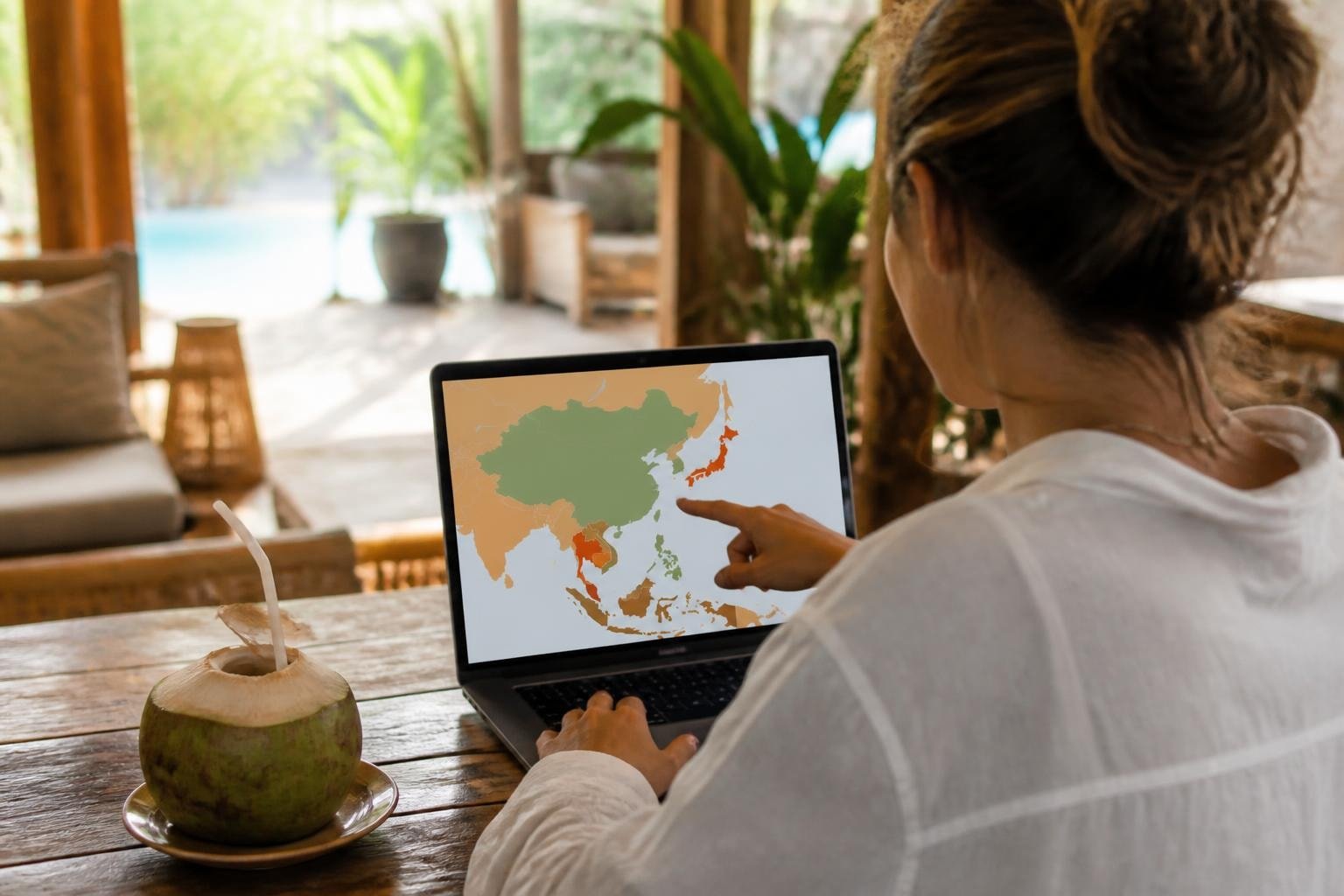

Asia has become the ultimate playground for digital nomads, and honestly, it’s not hard to see why. You’ve got affordable living costs, lightning-fast internet in most urban areas, and a cultural richness that makes every day feel like an adventure. If you’re considering where to set up your laptop next, the best asia tourist destinations offer more than just Instagram-worthy temples and beaches. They provide legitimate infrastructure for remote work, thriving expat communities, and visa options that actually make sense for long-term stays. Let’s dive into the destinations that strike the perfect balance between work productivity and life-changing experiences.
Southeast Asia: The Digital Nomad Headquarters
Thailand: Where Affordability Meets Infrastructure
Thailand remains one of the best asia tourist destinations for a reason. Bangkok and Chiang Mai have essentially built their reputations on being digital nomad friendly. You’re looking at coworking spaces on every corner, accommodation ranging from $300 monthly apartments to $15 hostels, and street food that costs less than your morning coffee back home.
Chiang Mai specifically deserves its own spotlight. The city offers:
- Monthly living costs: $800-1,200 including rent
- Coworking day passes: $3-8
- Reliable fiber internet: Available in most neighborhoods
- Active nomad community: Weekly meetups and networking events
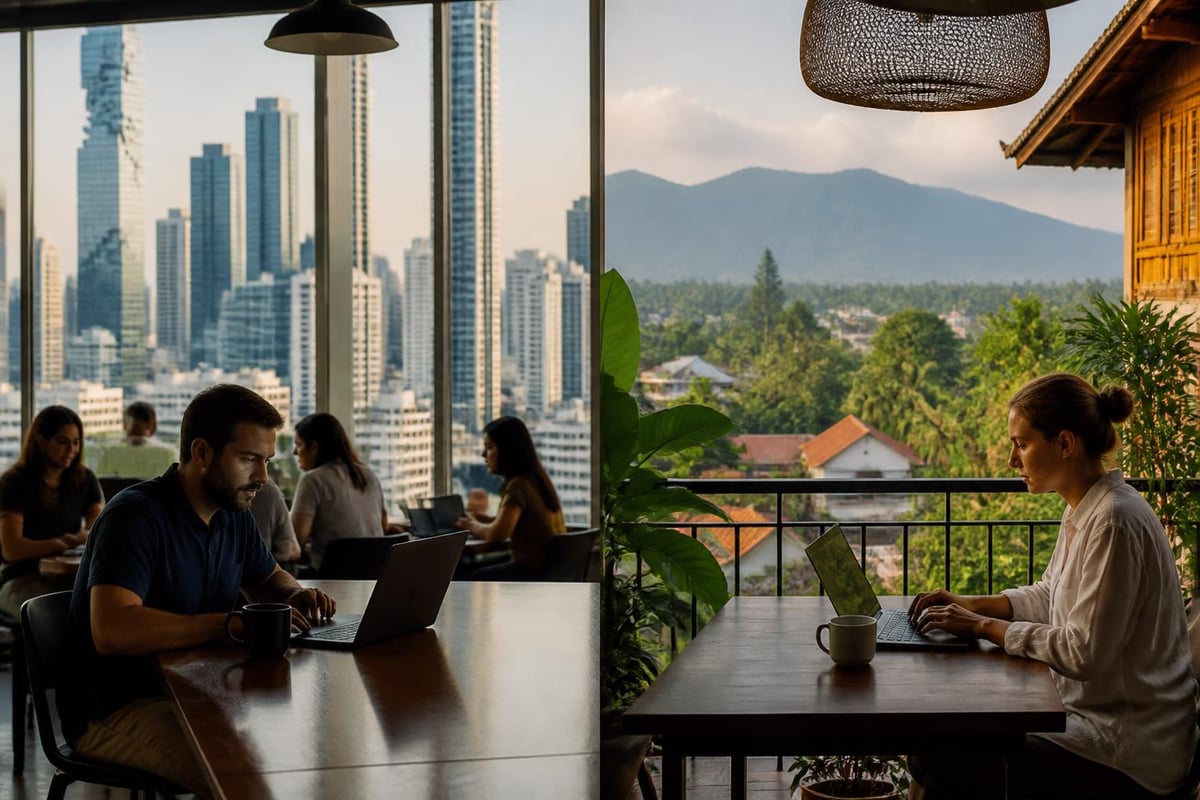
Bangkok provides a different vibe entirely. It’s faster, more cosmopolitan, and slightly pricier, but you gain access to better healthcare facilities and international airports with dirt-cheap flights across Asia. The cost of living in Thailand for digital nomads makes it incredibly attractive for those testing the nomad lifestyle without breaking the bank.
Vietnam: Budget Paradise with Character
Vietnam has quietly climbed the ranks to become one of the best asia tourist destinations for budget-conscious travelers. Hanoi and Ho Chi Minh City both offer exceptional value, but the real gems lie in coastal cities like Da Nang and Hoi An.
Da Nang has transformed into a digital nomad hotspot. Picture this: beachfront living, modern apartments with ocean views for under $400 monthly, and a growing community of remote workers. The city invested heavily in infrastructure, meaning you’re getting speeds that rival Western countries at a fraction of the cost.
| City | Monthly Rent | Meal Cost | Coworking |
|---|---|---|---|
| Hanoi | $300-500 | $1-3 | $50-80/mo |
| HCMC | $350-600 | $1.50-4 | $60-100/mo |
| Da Nang | $250-450 | $1-3 | $40-70/mo |
The food scene alone justifies Vietnam’s position on any list. You’re eating world-class pho, banh mi, and fresh spring rolls for pennies. And when you need a break from work, you’ve got UNESCO World Heritage sites, stunning beaches, and mountain retreats within easy reach.
Indonesia: Island Life with Internet
Bali dominates conversations about Indonesia, and while Canggu and Ubud absolutely deliver on the digital nomad dream, they’re getting crowded and expensive by Southeast Asian standards. But here’s the thing: Indonesia has over 17,000 islands, and many are waking up to the remote work revolution.
Bali’s appeal is undeniable:
- Established nomad scene with accountability groups
- Yoga studios, healthy cafes, and wellness focus
- Beautiful coworking spaces like Dojo Bali
- Easy visa runs to nearby countries
But consider exploring Jakarta for urban energy, Yogyakarta for culture and education, or even venturing to lesser-known islands. The hidden travel gems on a budget guide can point you toward Indonesian destinations that haven’t hit mainstream nomad radar yet.
East Asia: Higher Costs, Higher Returns
Japan: Premium Experience for Serious Professionals
Japan doesn’t scream “budget destination,” but it belongs on the best asia tourist destinations list for digital nomads who’ve scaled their income. Tokyo, Osaka, and Fukuoka offer something unique: a combination of hyper-efficiency, safety, cultural depth, and technological advancement you won’t find elsewhere.
Tokyo monthly costs hover around $2,000-3,000, but you’re getting:
- Flawless public transportation
- Some of the fastest internet on Earth
- Zero crime concerns for your equipment
- Michelin-starred ramen for $8
The Japan visa situation requires planning. Tourist visas give you 90 days, and you’ll need to do visa runs or apply for longer-term options. However, the experience of working from a traditional machiya house or a sleek Tokyo coworking space while exploring temples on weekends creates memories worth the investment.

South Korea: Connectivity Capital
Seoul might be the most connected city on planet Earth. We’re talking gigabit internet as the standard, not the exception. South Korea has positioned itself among the best asia tourist destinations for digital workers who depend on flawless connectivity for video calls, large file transfers, or streaming work.
The cafe culture in Seoul is something else. You’ll find 24-hour coffee shops with free WiFi, unlimited seating time, and power outlets everywhere. Monthly costs run $1,500-2,500, placing it between Southeast Asia and Japan in terms of affordability.
Taiwan: The Underrated Gem
Taiwan consistently flies under the radar when people discuss the best asia tourist destinations, which is honestly baffling. Taipei offers incredible food, friendly locals, excellent public transit, and costs that sit comfortably between Southeast Asia and Japan.
What makes Taiwan special:
- Health insurance access for long-term residents
- Convenient stores (7-Eleven) that handle everything from bill pay to meals
- Hot springs scattered throughout the island
- Typhoon-season considerations (June-October)
The island is small enough to explore thoroughly during your stay, with mountain hikes, coastal views, and night markets providing endless weekend adventures. According to Lonely Planet’s comprehensive guide to Asian destinations, Taiwan combines the best of traditional and modern Asia.
South Asia: Cultural Immersion on a Shoestring
India: Maximum Culture, Minimum Spend
India challenges you in ways other destinations don’t. It’s loud, chaotic, colorful, and overwhelming, but the best asia tourist destinations list wouldn’t be complete without mentioning it. Goa has become the default choice for digital nomads, offering beach vibes and a well-established foreign community.
But venture beyond Goa. Bangalore (Bengaluru) is India’s tech capital, meaning you’re surrounded by innovation and entrepreneurship. Delhi provides cultural immersion with every major monument and museum. Rishikesh delivers spiritual awakening and yoga retreats when burnout hits.
Budget breakdown for India is wild:
- Monthly rent in Goa: $200-400
- Daily meals: $2-5
- Coworking spaces: $30-60/month
- Yoga class: $3-5
The affordable digital nomad visas resource covers India’s e-visa system, which has improved dramatically over recent years. You can stay up to 180 days depending on your visa type.
Nepal: Mountain Majesty
Kathmandu and Pokhara attract digital nomads seeking something different. Internet reliability has improved, though it’s still not matching Southeast Asian standards. What you sacrifice in connectivity, you gain in unparalleled natural beauty and spiritual atmosphere.
Nepal works best as a:
- Short-term stay (1-3 months)
- Writing or creative work base
- Mental health reset location
- Base for trekking adventures
The cost of living barely registers. You’re talking $400-600 monthly for a comfortable lifestyle. The challenges lie in visa extensions (requiring border runs) and infrastructure limitations during monsoon season.
Emerging Destinations Worth Watching
Malaysia: Long-Term Stability
Kuala Lumpur and Penang have been digital nomad favorites for years, and Malaysia continues earning its spot among the best asia tourist destinations. The MM2H (Malaysia My Second Home) visa program offers one of Asia’s most accessible long-term residency options, though recent changes have increased financial requirements.

Penang specifically offers:
- UNESCO World Heritage Georgetown
- Beach proximity in Batu Ferringhi
- Excellent hawker food culture
- International school options for nomad families
- English-speaking population
Monthly costs range from $800-1,400, providing middle-ground pricing between budget Southeast Asia and pricier East Asian cities. The Los Angeles Times recently highlighted how Malaysian cities blend modern infrastructure with cultural authenticity.
Philippines: Island Hopping Central
The Philippines deserves more attention as one of the best asia tourist destinations for remote workers. Manila has the infrastructure, but places like Siargao, Palawan, and Cebu offer better quality of life. English is widely spoken, which eliminates the language barrier that frustrates some nomads elsewhere in Asia.
Internet concerns are real. Outside major cities, connectivity becomes unpredictable. Always have backup solutions: mobile hotspots, multiple SIM cards, and patience. When the WiFi works, you’re living in paradise for under $1,000 monthly.
| Aspect | Manila | Cebu | Siargao |
|---|---|---|---|
| Living Cost | $700-1,200 | $600-1,000 | $500-900 |
| Internet | Excellent | Good | Spotty |
| Community | Large | Medium | Small |
| Beach Access | Limited | Nearby | Immediate |
Cambodia: The Budget Alternative
Phnom Penh and Siem Reap provide ultra-budget options when Thailand feels too expensive. Cambodia uses US dollars, simplifying financial planning. The visa situation is incredibly straightforward with cheap, easy extensions available.
Siem Reap, home to Angkor Wat, has developed a small but dedicated nomad scene. You’re looking at $400-700 monthly costs with modern apartments, decent coworking spaces, and improving infrastructure. The RoughMaps compilation of must-see Asian landmarks includes Angkor Wat among the top attractions.
The downside? Cambodia’s internet speeds lag behind neighbors, and the extreme heat (March-May) can be brutal without proper air conditioning.
Practical Considerations for Choosing Your Base
Budget Alignment
Your digital nomad budget determines which destinations make sense. Don’t stretch yourself thin trying to afford Tokyo when Vietnam offers 80% of the experience at 40% of the cost. Be honest about your income level and spending habits.
Budget tiers roughly break down as:
- Ultra-budget ($600-900/month): Cambodia, Nepal, Philippines (outside Manila)
- Standard budget ($900-1,500/month): Thailand, Vietnam, Indonesia
- Comfortable ($1,500-2,500/month): Malaysia, Taiwan, South Korea
- Premium ($2,500+/month): Japan, Singapore, Hong Kong
Visa Logistics Matter
The best asia tourist destinations become problematic if you’re constantly doing visa runs. Research visa requirements before committing to a location. Some countries offer special digital nomad visas now, while others require creative solutions involving tourist visa extensions or nearby border crossings.
Thailand’s visa situation changed in 2024-2025 with new long-term visa options. Indonesia launched a second home visa. Malaysia adjusted MM2H requirements. Staying current on these changes prevents unexpected scrambles when your 30-day stamp expires.
Community vs. Solitude
Do you thrive in established nomad communities, or does the digital nomad scene make you cringe? Chiang Mai, Canggu, and Bangkok have massive communities with constant meetups, coworking events, and networking opportunities. Smaller cities offer solitude and deeper local connections but less built-in social infrastructure.
Neither approach is wrong. Just know yourself. Extroverts burn out in isolated locations, while introverts feel overwhelmed by the constant social pressure in nomad hubs.
Healthcare Access
Medical emergencies happen. The best asia tourist destinations for long-term stays have quality healthcare at reasonable prices. Thailand, Malaysia, Singapore, and Taiwan offer excellent medical facilities. India has world-class hospitals in major cities. Nepal and Cambodia? You might need medical evacuation for serious issues.
Travel insurance remains non-negotiable. And yes, travel credit card hacks for beginners can help offset some insurance costs through card benefits.
Making Your Decision
Choosing among the best asia tourist destinations ultimately comes down to personal priorities. What matters most: budget, community, culture, food, nature, safety, internet speed, or something else entirely?
Create your priority matrix:
- List your top 5 non-negotiables
- Rank destinations against each criterion
- Research visa requirements for top three choices
- Join digital nomad Facebook groups for current intel
- Book 2-4 weeks initially, not 6 months
Asia rewards flexibility. Your perfect destination might surprise you. The city you thought would be temporary becomes home. The expensive place you avoided fits your needs perfectly. The famous nomad hub feels wrong despite glowing reviews.
Start somewhere, stay curious, and remember that choosing the wrong destination teaches you what you actually need. Every experience, even the challenging ones, refines your understanding of how and where you work best. Resources like Gulf News’s Southeast Asia destination guide provide additional perspectives on what makes each location unique.
The beautiful thing about establishing yourself as a digital nomad in Asia? You’re never stuck. Don’t like the humidity in Vietnam? Head to cooler Taiwan. Need cheaper rent? Drop down to Cambodia. Missing metropolitan energy? Tokyo awaits. The freedom to optimize your environment based on current needs and goals represents the true value of this lifestyle.
Asia offers digital nomads unmatched variety in culture, cost, and lifestyle options across dozens of viable destinations. Whether you’re prioritizing ultra-low budgets in Southeast Asia or premium experiences in Japan and South Korea, the continent delivers. Ready to turn these possibilities into your reality? XRWXV provides the visa strategies, budget frameworks, and location-specific insights you need to make informed decisions and build a sustainable nomadic lifestyle across Asia’s best destinations.
