Standing at the airport check-in, I watched this guy ahead of me get absolutely wrecked by baggage fees. $180. For two checked bags plus some overweight charge. His face when they told him the price—like he’d been punched in the stomach.
I walked straight past with my single 40L backpack. Zero fees. Straight to security while he was still at the counter counting out cash.
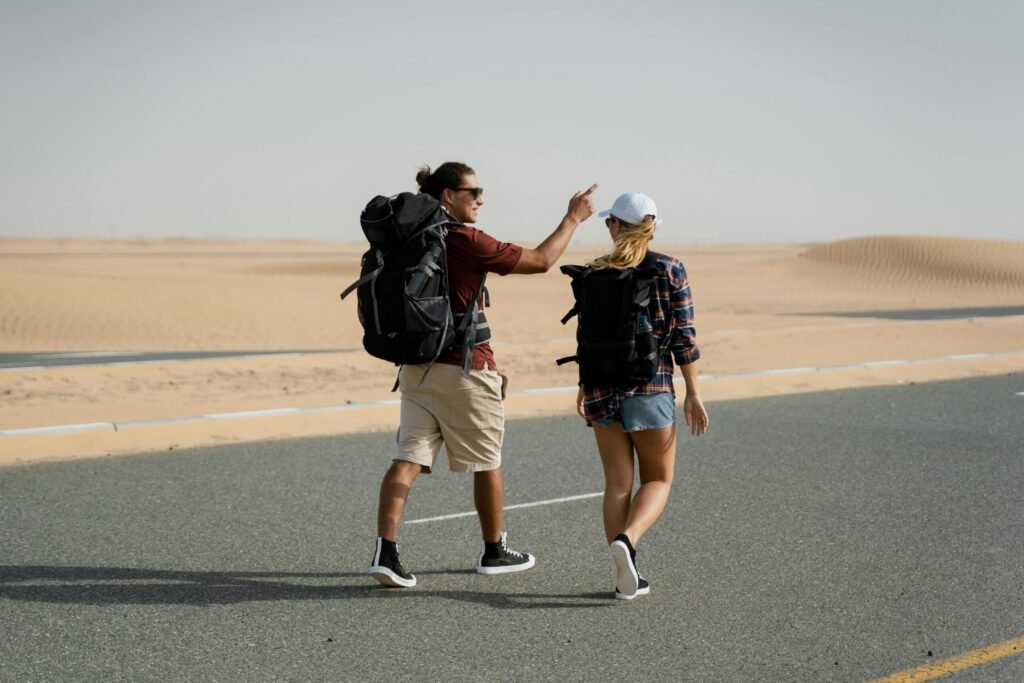
That was five years ago and it completely changed how I think about travel. Learning to travel the world with a backpack isn’t really about packing light—it’s about total freedom. Catch flights last minute without worrying about bag drop cutoff times. Jump on random buses without wrestling heavy luggage. Change plans spontaneously without thinking “but what about my bags…”
Backpacking Southeast Asia: The Ultimate Travel Guide 2025
My first big trip? Packed like a complete idiot. A 70L monstrosity stuffed with crap I “might need.” Hauling that thing up four flights of stairs in Bangkok, I was drenched in sweat before I even saw my room. Week three I shipped half that garbage home and swore never again.
Now I’ve hit 47 countries with nothing but a 35L backpack. Same bag for years. Minimal gear, maximum freedom. People see it and their first question is always “how do you travel the world with a backpack that small for months?”
Honestly? It’s not that complicated. Just completely different from how most people think about packing.
Show Image Alt text: one-bag travel lifestyle
This guide is everything I’ve learned about minimalist world travel through tons of trial and error. Choosing the right backpack size. What actually needs to go in it. How to pack light for long trips without feeling like you’re suffering. The gear worth buying and the stuff that’s complete waste of money and space.
Whether you’re planning your first backpacking trip or you’re sick of dealing with heavy luggage, this is the practical stuff that makes backpack-only travel actually work long-term.
Best Credit Cards for Digital Nomads in 2025
Why Travel the World With Only One Backpack
Before we get into gear and packing lists, let’s talk about why one backpack world travel beats traditional luggage for most people.
Minimalism Forces You to Actually Think
When you’ve only got 35-40 liters of space, you become insanely intentional about what comes with you. No “just in case” items. No “maybe I’ll wear this.” Everything has to earn its spot.
Sounds limiting, right? It’s actually the opposite. You stop overthinking outfits. Stop accumulating random stuff. Your entire travel life fits in one bag you can comfortably carry for hours.
I used to stress constantly about having enough outfit options. Now I own seven shirts total and genuinely never think about it. Do laundry once a week, wear the same rotation, done. The mental space that frees up for actually experiencing places instead of managing stuff? Can’t put a price on that.
Money Adds Up Crazy Fast
Budget airlines in Europe and Asia hit you for $30-80 checked bag fees. Every. Single. Flight. Moving around a lot? That’s hundreds or thousands over a trip.
Carry-on only travel means:
- Zero bag fees (saving $30-80 per flight)
- No replacing lost luggage
- Can book crazy cheap airlines that don’t include bags
- Less taxi money (way easier to walk or take public transit)
Real numbers: Last year I took 14 flights around Europe and Southeast Asia. Checking a bag each flight at average $40? That’s $560 in baggage fees. My actual cost? Zero. That $560 funded a whole extra month in Vietnam.
Mobility is a Complete Game Changer
Try sprinting to catch a bus with two checked bags and a carry-on. Now try it with one backpack on your shoulders. Not even close.
One-bag travel gives you ridiculous mobility:
- Navigate packed train stations easy
- Walk longer distances to save transport money
- Take local buses instead of expensive taxis
- Climb stairs in old European buildings with no elevator
- Move through crowds without smashing into everyone
- Switch accommodations instantly if somewhere sucks
This mobility opens up so many options. I’ve caught trains with literally 2 minutes to spare, sprinting through stations. Walked 30 minutes to hostels to save $5 on taxi fare. Explored cities all day without going back to drop off stuff. None of this works with multiple heavy bags.
Never Checking Bags is Real Freedom
Never checking a bag means never dealing with lost luggage. Never standing at baggage claim watching that carousel, hoping your stuff shows up. Never dealing with connections where bags don’t make it.
You get off the plane and just go. Straight through immigration, straight out. Easy.
Plus you can be way more spontaneous. See a cheap flight leaving in 3 hours? Book it and bounce. No worrying about extra time for checking bags or cutoff times.
The freedom of ultralight backpack travel isn’t just physical—it’s mental. Less stuff means less to worry about, less to manage, less stress. More energy for actually enjoying where you are.
Way Less Stress About Everything
Heavy luggage creates this constant low-level stress. Will it fit in this compartment? Can I handle these stairs? Is this secure? Will they charge me overweight fees?
With one backpack, all that vanishes. Your bag fits any overhead bin or under any seat. You can keep it with you always. Light enough it doesn’t destroy your shoulders and back.
This stress reduction is honestly one of the biggest benefits. You show up in new cities feeling good instead of exhausted from managing heavy bags. You say yes to more random opportunities because moving isn’t a massive hassle.
Choosing the Perfect Backpack
Getting the right backpack matters a lot for long-term travel packing. Wrong size or style and you’ll regret it constantly.
35L vs 40L vs 55L: What Actually Works
First decision and it matters more than you’d think.
35L backpacks:
- Lightweight, guaranteed carry-on everywhere, forces serious minimalism
- Downside: Tight on space, tough for cold climates
- Best for: Warm weather, experienced packers, shorter trips
40L backpacks:
- Sweet spot for most people, usually carry-on compliant, enough space for varied climates
- Downside: Gets tight with winter gear
- Best for: Year-round travel, varied climates, most travelers
55L backpacks:
- Plenty of space, handles winter gear easy
- Downside: Often too big for carry-on, tempts overpacking, heavier
- Best for: Long-term travel including cold climates
My recommendation for most people doing minimalist world travel: 40L. It’s the Goldilocks size. Enough space to be comfortable without tempting you to pack useless stuff.
I use 35L now because I’ve gotten good at packing and travel almost entirely in warm places. But when I started one-bag travel, 40L would’ve been perfect.
Important: Check airline carry-on limits before buying. Different airlines have different rules. Most accept up to 45L total volume if the dimensions work, but budget airlines can be stricter.
Front-Loading vs Top-Loading
This affects how you pack and access stuff daily.
Top-loading (traditional hiking packs):
- Opens from top with drawstring
- Usually has bottom compartment access
- More weather resistant, often lighter
- Harder to access stuff at bottom, requires unpacking everything for one item
Front-loading (clamshell opening):
- Opens fully like a suitcase
- See everything at once, grab stuff easy, pack more efficiently
- Slightly less weather resistant (not really an issue though)
For travel the world with a backpack lifestyle, front-loading wins. Being able to open your bag fully and see everything makes packing way easier and finding stuff way faster.
I switched from top-loading to front-loading after a year and the difference is massive. No more unpacking everything to find one shirt at the bottom.
Durability Actually Matters
Your backpack gets beat to hell traveling. Stuffed in overhead bins, thrown on bus roofs, dragged across floors, used as a pillow on overnight buses. It needs to survive.
Look for:
- Heavy-duty zippers (YKK is the standard)
- Reinforced stress points (corners, straps)
- Water-resistant materials (not waterproof but good enough)
- Quality stitching throughout
- Good warranty (brands confident in durability offer long warranties)
Don’t cheap out on your main bag. A quality backpack costs $150-300 but lasts for years of heavy travel. A cheap one falls apart in months and you’re constantly buying replacements.
What People Actually Use
Some popular options for carry-on only travel:
Osprey Farpoint 40: Industry standard for a reason. Comfortable, durable, perfect size. Around $160.
Tortuga Setout: Designed specifically for digital nomad packing. Opens flat like a suitcase. Great organization. $250-300.
Nomatic Travel Pack: Tech-focused with tons of organization. Expensive ($300+) but digital nomads love it.
Cabin Zero 44L: Budget option ($80-100). Fewer features but gets the job done.
Patagonia Black Hole 40L: Super durable, weather resistant. $150-180. Great for outdoor-focused travel.
I’ve used an Osprey Farpoint 40 for three years of constant travel. Beat up but still going strong. Can’t recommend it enough for most people starting one-bag travel.
The Ultimate Packing List for Backpack-Only Travel
Now what actually goes in your backpack. This is refined through long-term travel packing that works across seasons and climates.
Clothes: Keep It Minimal
Clothes take the most space, so this is where minimalism matters most. Here’s what works for backpack-only travel tips:
Tops:
- 3-4 t-shirts (merino wool or synthetic for quick-dry)
- 2 long-sleeve shirts (one button-up for nicer occasions)
- 1 light jacket or fleece
- 1 rain jacket (doubles as wind layer)
Bottoms:
- 2 pairs pants (1 jeans or chinos, 1 travel pants with pockets)
- 1 shorts
- 1 swim trunks (doubles as shorts)
Underwear and socks:
- 5 underwear (merino or synthetic, wash frequently)
- 5 pairs socks (3 regular, 2 wool for cold)
Other:
- 1 hat or cap
- 1 pair comfortable walking shoes (worn on travel days)
- 1 sandals or flip-flops
- Sunglasses
Total: Fits easily in half your backpack with packing cubes. You wash weekly so you don’t need more.
Fabric matters: Merino wool and synthetic fabrics dry overnight, resist odors, pack smaller than cotton. Worth the investment for core pieces.
Show Image Alt text: ultralight packing list
Tech for Digital Nomads
If you’re working while traveling, tech is necessary. But keep it minimal.
Core tech:
- Laptop (13″ is sweet spot for weight vs usability)
- Phone
- E-reader (saves space over physical books)
- Power bank (10,000mAh minimum)
- Universal travel adapter
- Charging cables
- Noise-canceling headphones or earbuds
Maybe useful:
- External hard drive for backups (256GB)
- Mouse (if you work a lot)
- Foldable laptop stand
Store all tech in one padded section. I use a small tech pouch keeping everything organized and protected.
Photography: I use my phone for 95% of photos now. If you need a real camera, consider compact mirrorless rather than DSLR to save space and weight.
Toiletries: Way Less Than You Think
Most toiletries are available everywhere. Buy locally instead of carrying full-size products.
What to bring:
- Small bottles (100ml or less) of shampoo, soap
- Toothbrush, toothpaste (travel size)
- Deodorant
- Sunscreen (buy locally, it’s everywhere)
- Basic first aid (band-aids, pain reliever, anti-diarrheal)
- Prescriptions if needed
- Small nail clippers
- Razor
Skip:
- Full-size anything (buy travel size or refill small bottles)
- Towel (hostels provide them)
- Tons of “just in case” medications
Total toiletries should fit in a quart-size bag or small pouch. Bigger than that? You’re bringing too much.
Documents and Money
Keep these organized and accessible:
- Passport
- Backup passport photos (useful for visas)
- Credit cards (2-3 from different banks)
- Debit card
- Small amount of USD cash (emergency backup)
- Travel insurance documents (printed and digital)
- Vaccination records if needed
- Photocopies of important documents
I keep documents in a small pouch in an easily accessible pocket. Original passport goes in hotel safe when possible, I carry a photocopy exploring.
The “Maybe” Category
These depend on your specific travel style:
- Lightweight day pack (folds flat, useful for day trips)
- Water bottle with filter (essential in some regions)
- Locks (for hostel lockers)
- Dry bag (useful in rainy conditions/water activities)
- Portable WiFi hotspot (if you work online)
Only add these if you’ll actually use them regularly. Don’t pack “just in case.”
How to Pack Light for Long Trips
Having the right stuff is half the battle. Packing it efficiently is the other half.
Packing Cubes Changed Everything
Packing cubes honestly changed my life. They compress clothes, keep everything organized, make finding stuff way easier.
Basic setup:
- 1 large cube: Clean clothes (shirts, pants)
- 1 medium cube: Underwear, socks
- 1 small cube: Dirty clothes
- 1 small cube: Miscellaneous (chargers, small items)
With packing cubes, I can pull out just the cube I need without messing up everything else. Dirty clothes stay separate from clean. Everything has a place.
Compression cubes are worth the extra $10-20. They squeeze out air and save real space.
Rolling vs Folding: Both Work
The eternal debate. Truth is both work, use what makes sense.
Rolling:
- Better for t-shirts, casual clothes
- Reduces wrinkles somewhat
- Easy to see what you have
- Takes slightly less space
Folding:
- Better for button-ups, nicer clothes
- Cleaner look
- Works well with packing cubes
I roll t-shirts and casual stuff, fold nicer shirts and pants. Mix both.
More important than rolling vs folding: Fill empty spaces. Socks go inside shoes. Small items fill gaps. Use every cubic inch efficiently.
Weight Distribution Changes Comfort
How you pack affects comfort massively. Heavy stuff should go closest to your back (side touching your body), not at the bottom.
Good distribution:
- Heavy items (laptop, shoes, toiletries) close to your back, mid-height
- Medium weight (clothes) in main compartment
- Light stuff (rain jacket, day pack) in outer areas
- Frequently needed items in external pockets
A well-balanced 15kg pack feels way better than a poorly balanced 12kg pack. Take time to organize properly.
One-In-One-Out Rule
This is crucial for long-term travel packing. When you buy something new (shirt, souvenir, whatever), something old goes out. Donate it, leave it, give it away. But the bag doesn’t get fuller over time.
This prevents slow backpack bloat where you accumulate stuff and suddenly can’t fit everything. Stay disciplined.
Exception: If something wears out and you replace it, that’s not adding—that’s maintaining.
Living Comfortably Out of One Backpack
Having minimal stuff is one thing. Actually living comfortably with minimal stuff for months requires some strategies.
Laundry Becomes Routine
With only 4-5 shirts, you’re washing clothes weekly minimum. This becomes normal fast.
Laundry options:
- Hostel/hotel laundry service (cheapest, usually $3-5 per load)
- Laundromats ($5-8 per load, you do it)
- Hand wash in sink/shower (free, takes time, clothes dry overnight with quick-dry fabrics)
I usually use cheap local laundry services. Drop off clothes morning, pick up evening or next day. Costs almost nothing and saves time versus doing it myself.
For quick-dry synthetic and merino clothes, hand washing in the sink works great. Wring them out well, hang overnight, dry by morning.
Laundry hack: Wash underwear and socks in the shower while you shower. They dry overnight. Now you only need full laundry less frequently.
Digital Minimalism Too
Physical minimalism is obvious with one backpack. Digital minimalism matters almost as much for ultralight backpack travel.
Keep digital files organized:
- Cloud storage for important documents (Google Drive, Dropbox)
- Photo backup system (don’t fill your phone, backup regularly)
- Minimal apps (delete stuff you don’t use)
- Organized folders for work, personal, travel info
Digital clutter creates mental clutter just like physical stuff. Keep both minimal.
Comfort With Less
Living minimally doesn’t mean being uncomfortable. Small things that improve comfort without taking space:
Worth bringing:
- Good shoes (foot pain ruins everything)
- Decent headphones (blocks noise, improves travel quality)
- Eye mask and earplugs (sleep quality matters)
- One comfort item (small book, travel journal, whatever makes you happy)
Don’t need:
- Multiple shoes (one pair works)
- Lots of “relaxing” clothes (travel clothes work for relaxing too)
- Comfort blankets, pillows, etc (places provide these)
The key is distinguishing between actual comfort and perceived need. You adapt to having less way faster than you think.
Budget Tips for Backpack World Travel
Traveling with one backpack naturally saves money, but you can stretch budget further with smart moves.
Hostels Are Perfect
Hostels work great for one-bag travel. Lockers for security, laundry service, kitchens for cooking, social atmosphere.
Budget hostel strategy:
- Book in advance for better rates (Hostelworld, Booking.com)
- Choose hostels with kitchens (cooking saves $200+ monthly)
- Get 6-8 bed dorms, not 12+ (better sleep for $2-3 more)
- Read reviews carefully (good hostels matter)
Cost: $8-15 nightly in cheap countries, $20-35 in expensive ones. Way cheaper than hotels.
Private rooms: When you need a break from dorms, many hostels offer cheap private rooms. $25-40 for your own space with hostel amenities.
Work Exchange Saves Thousands
Work exchange lets you travel almost free in exchange for a few hours work daily.
Workaway: Work 4-5 hours daily for accommodation and often food. Perfect for staying somewhere longer without spending much. Annual membership $49.
Worldpackers: Similar to Workaway. Trade work for accommodation. Membership around $49 yearly.
WWOOF: Work on organic farms. Food and accommodation included. Great for rural experiences.
I’ve done three work exchanges. Stayed a month in Croatia, two weeks in Portugal, month in Thailand. Saved probably $2,000 total in accommodation while having incredible local experiences.
These programs are perfect for carry-on only travel—you’re staying put for a while so minimal packing works great.
Slow Travel Saves Money
Moving constantly is expensive. Transportation, accommodation turnover, always eating out because you don’t have a kitchen yet.
Slow travel means staying 2-4 weeks minimum per place:
- Monthly rates (30-50% cheaper than daily)
- Time to cook regularly (saves hundreds on food)
- Local prices instead of tourist prices (you learn where locals shop)
- Better deals on everything (locals help you find cheap stuff)
- Less transportation costs
Example: Moving every 3 days for a month = $450+ accommodation. Staying one month same place = $300-400 in cheap countries, often with better quality.
One backpack makes slow travel easier. You’re not lugging stuff around constantly, so staying longer is more comfortable.
Safety Tips for Backpack-Only Travel
Traveling with everything in one bag means protecting that bag and its contents.
Basic Anti-Theft Stuff
Your backpack contains literally everything you own while traveling. Protect it.
Anti-theft strategies:
- Never leave backpack unattended
- Use hostel lockers always (bring your own lock)
- Cable lock to secure backpack to bed/seat on overnight transport
- Keep valuables in front pocket in crowded areas
- Anti-theft features: lockable zippers, cut-resistant fabric, hidden pockets
Honestly, most travelers never have issues because thieves target obvious tourists with expensive cameras and open bags. A nondescript backpack you keep close isn’t appealing.
Insurance is Non-Negotiable
Everything in your backpack is replaceable except maybe a few things. But you still need insurance for medical emergencies, lost stuff, and trip interruptions.
Good travel insurance covers:
- Medical emergencies and evacuation
- Stolen or lost belongings (including your backpack)
- Trip cancellation or interruption
- Emergency accommodation
I use SafetyWing ($45-50 monthly) for long-term coverage. World Nomads is good too but slightly pricier.
The peace of mind knowing you’re covered if something goes wrong is worth way more than the cost.
Protect Documents
Losing your passport while traveling is a nightmare. Protect critical documents:
Document security:
- Keep passport in hotel safe when possible, carry photocopy
- Digital scans of passport, credit cards, insurance docs (email yourself or cloud storage)
- Physical photocopies in separate location from originals
- Emergency contacts saved multiple places
I keep passport photos and document scans in Google Drive, accessible from any device. If everything gets stolen, I can still prove identity and have emergency contacts.
Backup Important Stuff
With all your stuff in one bag, redundancy matters:
- Multiple credit/debit cards from different banks
- Backup phone if possible (old smartphone works)
- Power bank and backup cables
- Some USD cash hidden separately from regular money
- Critical info written down (emergency contacts, insurance number)
If your bag gets stolen, you should be able to survive and solve the problem without everything being completely lost.
Sample 35L Packing Setup
Here’s exactly what I fit in my 35L backpack for year-round travel. This works for me traveling warm climates primarily:
Clothes (2 packing cubes):
- 4 t-shirts (2 merino, 2 synthetic)
- 2 long-sleeve shirts (1 casual, 1 button-up)
- 1 light fleece jacket
- 1 rain jacket
- 2 pants (1 jeans, 1 travel pants)
- 1 shorts
- 1 swim trunks
- 5 underwear
- 5 socks (3 regular, 2 merino)
- 1 hat
- Walking shoes (worn while traveling)
- Sandals
Tech (laptop sleeve + small pouch):
- 13″ laptop
- Phone
- Kindle
- Power bank (10,000mAh)
- Universal adapter
- Charging cables
- Earbuds
- Small mouse
Toiletries (small pouch):
- Travel-size shampoo, soap
- Toothbrush, toothpaste
- Deodorant
- Nail clippers
- Small first aid kit
- Prescription meds
- Sunscreen (small bottle, refill locally)
Documents (small organizer):
- Passport
- Credit cards
- Cash
- Insurance info
- Backup passport photos
Misc:
- Small day pack (folds flat)
- Water bottle
- 2 locks
- Sunglasses
- Travel journal + pen
Total weight: About 8kg (17.6 lbs) including electronics. Comfortable to carry all day if needed.
Everything fits with room to spare. I could probably downsize to 30L honestly, but 35L gives flexibility for souvenirs or if I buy something along the way.
Conclusion
Learning to travel the world with a backpack changed everything about how I experience travel. The freedom of walking through airports without checking bags. The ease of hopping on trains last-minute. The comfort of carrying everything I own without strain.
Took time to get here. My first attempt at minimalist world travel was rough—I packed too much and regretted it fast. But over time, I figured out what actually matters and what’s just dead weight.
The travelers I meet who’ve mastered one-bag travel share certain things. They’re more mobile, more spontaneous, less stressed. They spend less time managing stuff and more time actually experiencing places. They’ve figured out that freedom isn’t about having options—it’s about needing less.
You don’t need to go as minimal as I do. Maybe 40L works better for you. Maybe you need a few extra items I don’t carry. That’s fine—the point isn’t matching someone else’s packing list perfectly. It’s finding your own version of lightweight travel essentials that lets you move comfortably with everything you actually need.
Here’s what to do if you want to try backpack-only travel:
Start with your next trip, even just a week or two. Force yourself to fit everything in a 40L backpack. It’ll feel tight at first. You’ll second-guess whether you packed enough. Then you’ll realize you barely used half of it.
After that trip, cut 20% of what you brought. Next trip, cut another 20%. Eventually you’ll land on your perfect setup—minimal but comfortable, light but complete.
The world looks different when you’re traveling with one backpack. Less weighed down. More free. More focused on experiences instead of managing belongings. That difference is worth all the careful packing and ruthless minimalism.
Your version of travel the world with a backpack will look different than mine. But the freedom it creates? That’s universal.
👉 Travel lighter, move smarter—explore more digital-nomad finance and travel guides at XRWXV.com.
Related Resources
Ready to plan your minimalist travel journey? Check out these guides:
- Side Hustles for Travelers
- Save Money for Travel Without Sacrificing Lifestyle
- How to Travel Full-Time on a Budget
External Resources: