I flew business class to Tokyo last year. The ticket normally costs $4,800. I paid $87 in taxes and fees. That’s it.
Two months ago I stayed at a Marriott in Barcelona that charges $280/night. I paid zero dollars. Three weeks before that, I flew New York to London and back, then London to Athens, then Athens to Istanbul—five flights total that should’ve cost $1,200+. My actual cost? $112.
Before you think I’m rich or have some secret airline hookup, let me be clear: I make maybe $2,200/month as a freelance writer. I’m not wealthy. I’m just very, very good at travel hacking.
Travel hacking sounds like some sketchy underground thing, right? Like you’re gaming the system or doing something borderline illegal? That’s what I thought too when I first heard the term. Turns out it’s completely legal and honestly pretty straightforward once you understand how it works.
Here’s what most travel hacking guides won’t tell you: they’re written by people with perfect credit scores, stable incomes, and the ability to drop $5,000 on a credit card without blinking. They recommend strategies that sound great but require financial stability most of us don’t have. They skip over the pitfalls that can actually cost you money if you mess up.
This guide is different. I learned travel hacking while broke, with mediocre credit, and zero room for expensive mistakes. Everything here is based on what actually works when you’re trying to travel more while spending less—not when you’re already wealthy and just want to optimize.
Whether you’re trying to visit family without destroying your budget, planning your first big international trip, or figuring out how to travel full-time on a budget like I do, understanding travel hacking is genuinely the most valuable skill you can develop.
Let me show you how this actually works in real life.
What Travel Hacking Actually Is (And Isn’t)
Let’s start by killing some myths about travel hacking because there’s a lot of confusion about what this actually means.
Travel hacking is NOT:
- Illegal or shady (it’s completely legit)
- Only for rich people with perfect credit
- About spending money you don’t have
- Complicated or requiring a finance degree
- Manipulating or tricking airlines
Travel hacking IS:
- Using credit card sign-up bonuses strategically
- Earning points on spending you’re already doing
- Understanding airline loyalty programs
- Booking flights strategically with points instead of cash
- Finding creative ways to maximize value from rewards programs
The basic concept of travel hacking is simple: companies want your business, so they offer rewards to get it. Credit card companies offer huge sign-up bonuses to attract new customers. Airlines offer miles to keep you flying with them. Hotels offer points to fill rooms. Travel hacking is just being strategic about collecting these rewards and using them for maximum value.
Here’s a real example of travel hacking from my own life:
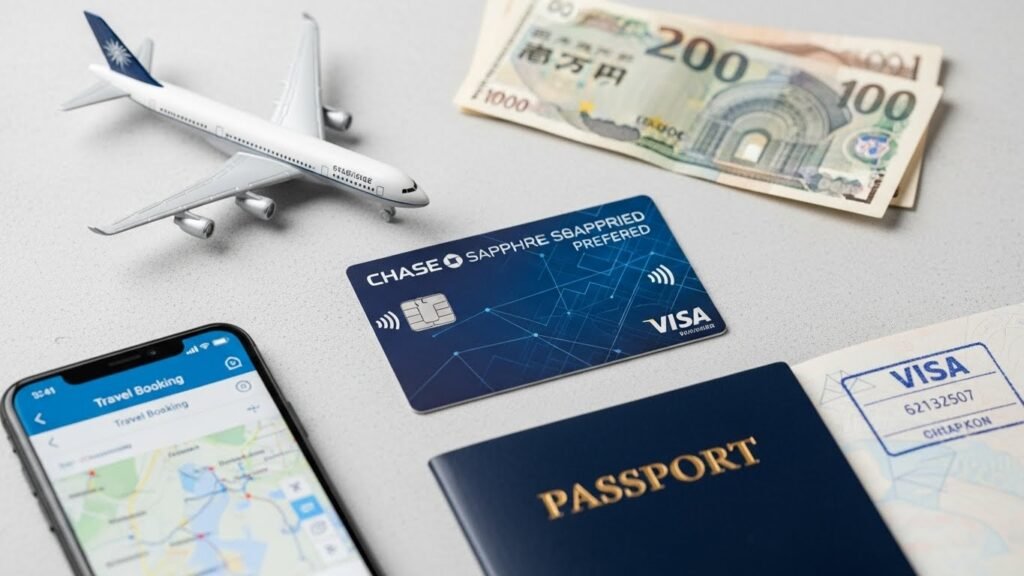
I signed up for the Chase Sapphire Preferred card. They offered 60,000 points if I spent $4,000 in 3 months. I put my normal expenses on it—groceries, gas, bills I was paying anyway—hit the spending requirement, got the 60,000 points. Those points transferred to United Airlines miles. I booked a round-trip flight to Tokyo that would’ve cost $1,200 cash. Used 70,000 points (60k from bonus + 10k from regular spending). Paid $87 in taxes.
That’s travel hacking. I didn’t spend money I wouldn’t have spent anyway. I didn’t go into debt. I just strategically earned rewards and used them for something valuable.
The key thing most travel hacking guides don’t emphasize enough: this only works if you’re financially responsible. If you carry credit card balances, if you overspend because you have a card, if you can’t pay it off completely every month—travel hacking will cost you money instead of saving it. The interest charges will destroy any rewards value.
But if you can treat credit cards like debit cards (spend only what you already have, pay off completely every month), travel hacking becomes incredibly powerful for flying more for less.
Credit Card Strategy: The Foundation of Travel Hacking
I resisted getting into travel credit cards for years. “Credit cards are bad.” “I’ll go into debt.” “It’s a trap.” All the stuff we’re taught about avoiding credit.
Turns out I was wrong, but with an important caveat: credit cards are only good for travel hacking if you use them correctly. Use them wrong and they’re absolutely a trap. Use them right and they’re the fastest way to earn free flights.
Choosing Your First Travel Hacking Card
Here’s what nobody tells you about choosing credit cards for travel hacking: start with ONE card. Not five. Not ten. One.
I see people jump into travel hacking and immediately apply for 4-5 cards. Bad idea. Your credit score drops. You get overwhelmed. You potentially overspend. Start simple.
For most people starting travel hacking, I recommend one of these:
Chase Sapphire Preferred (my personal first choice)
- Sign-up bonus: 60,000 points ($600+ value) after $4,000 spend in 3 months
- Annual fee: $95
- Why it’s good for travel hacking: Points transfer to multiple airlines and hotels, 2x points on travel and dining
- Why it’s beginner-friendly: Flexible points that work with many programs
Capital One Venture (good alternative)
- Sign-up bonus: 75,000 miles after $4,000 spend
- Annual fee: $95
- Why it’s good: Simple redemption—just erase travel purchases from your statement with points
- Less flexible than Chase but easier to understand for travel hacking beginners
Chase Freedom Unlimited (no annual fee option)
- Sign-up bonus: 20,000-30,000 points
- Annual fee: $0
- Why it’s good: No annual fee, cashback structure is simple, can transfer to Sapphire later
- Best for people nervous about annual fees when starting travel hacking
My honest opinion: If you can handle the $95 annual fee and meet the $4,000 spending requirement (which is just $1,333/month for 3 months—totally doable with normal expenses), get the Chase Sapphire Preferred. The 60,000 point bonus is worth way more than $95.
What you need to qualify:
- Credit score 690+ usually (not perfect, but decent) – check free at Credit Karma
- Provable income (they ask but rarely verify)
- No major delinquencies on your credit report
- Ability to pay off the balance monthly
If your credit isn’t there yet, start with a no-annual-fee card, use it responsibly for 6 months, then apply for a better travel hacking card once your score improves.
The Sign-Up Bonus Strategy for Travel Hacking
This is the absolute fastest way to accumulate points for travel hacking. Nothing else comes close.
Sign-up bonuses are insane value. Credit card companies are literally paying you $500-1,000 worth of rewards just to become a customer and prove you’ll use the card.
My system for maximizing sign-up bonuses in travel hacking:
1. Calculate your normal spending. Don’t guess. Actually look at your last 3 months of expenses. Rent (if you can pay with credit card), utilities, groceries, gas, subscriptions, eating out—what’s your total monthly spend?
2. Find cards where the spending requirement matches your normal spending. If you spend $2,000/month normally, a card requiring $4,000 in 3 months is perfect. You’ll hit it naturally without overspending. This is crucial for sustainable travel hacking.
3. Time it strategically. Got big planned expenses coming up? New laptop? Car repair you’ve been putting off? Holiday shopping? Apply for your travel hacking card right before these expenses so they count toward the bonus.
4. Use it for everything. During your 3-month bonus period, put literally every possible expense on that card. You’re trying to hit the threshold fast with money you were spending anyway.
5. Pay it off completely every month. This is non-negotiable for travel hacking. Set up autopay if needed. You cannot carry a balance and come out ahead with travel hacking.
6. Use your points strategically. Don’t blow your hard-earned points on low-value redemptions. We’ll cover this later.
Real numbers from my first year of travel hacking:
- Chase Sapphire Preferred: 60,000 points (used for Tokyo flight)
- Chase Freedom Unlimited: 25,000 points (used for NYC-London flight)
- Capital One Venture (got this 6 months later): 75,000 miles (used for hotels in Europe)
Total value: Approximately $1,900 worth of travel. Cost to me: $190 in annual fees. Net gain: $1,710.
That’s the power of sign-up bonuses in travel hacking. I didn’t spend any money I wouldn’t have spent anyway. I just routed it through credit cards strategically.
The Everyday Spending Multiplication
After you’ve gotten your sign-up bonus, travel hacking shifts to maximizing your regular spending.
Here’s my spending strategy for ongoing travel hacking:
Travel and dining = premium points. Most travel cards give 2-3x points on travel and dining. So when I book hostels, trains, flights (even if paying cash), or eat out, it goes on my travel card. This is how travel hacking compounds.
Groceries = category bonus. Some cards give extra points on groceries. Chase Freedom rotating categories sometimes include groceries at 5x points. Pay attention to which card gives best multiplier for your spending.
Everything else = base points. Even at 1x points, you’re still earning something toward future travel through travel hacking.
Real example: I spend about $1,800/month on my credit cards (remember, I’m paying it off completely every month):
- $600 on travel and dining = 1,200 points (2x)
- $500 on groceries = 500 points (1x, or 2,500 if using rotating category bonus)
- $700 on everything else = 700 points (1x)
That’s roughly 2,400 points per month, or 28,800 per year from regular spending. Add in sign-up bonuses and you’re at 80,000-100,000+ points annually. That’s multiple free flights through travel hacking.
The shopping portal trick for travel hacking:
Airlines and credit card companies have shopping portals where you earn extra points buying from regular stores online.
I use these constantly for travel hacking. Example: United’s shopping portal gives 2-5 miles per dollar spent at hundreds of stores. So if I’m buying something on Amazon anyway, I go through the United portal first, earn miles, then also get my credit card points. Double-dipping on the same purchase for travel hacking.
Does it take an extra 30 seconds? Yes. Does it add up to hundreds of extra miles? Also yes. Most major airlines have shopping portals—United, American, Southwest—check your airline’s website for theirs. For more ways to stretch your budget, check out best travel apps to save money.
Airline Loyalty Programs: The Other Half of Travel Hacking
Credit cards are great, but airline loyalty programs are where travel hacking gets really powerful—especially for frequent flyers.
Here’s what I got wrong about airline programs initially: I thought you needed to fly constantly to make them worthwhile. Not true. Even occasional flyers benefit from travel hacking through loyalty programs.
Picking Your Primary Airline for Travel Hacking
You can’t be loyal to every airline. Pick one primary airline (or alliance) and focus there for maximum travel hacking benefits.
The three major alliances:
- Star Alliance (United, Lufthansa, Air Canada, etc.)
- Oneworld (American Airlines, British Airways, Qantas, etc.)
- SkyTeam (Delta, Air France, KLM, etc.)
How to choose for travel hacking:
1. Which alliance flies routes you actually use? If you’re in the U.S. and fly domestically often, United or American makes sense. If you’re in Europe, maybe Lufthansa or British Airways.
2. Which airline has a credit card with good bonus? If you’re doing travel hacking with credit cards anyway, matching your airline program to your card streamlines things.
3. Which program has easiest redemption? United and American are generally easier than Delta for award availability in my experience with travel hacking.
I chose United for my primary travel hacking strategy because:
- They fly routes I use (NYC to international destinations)
- Star Alliance is huge (can use miles on like 25+ airlines)
- Chase points transfer to United (convenience for travel hacking)
- Their award chart is relatively reasonable
Earning Miles Beyond Flying
You don’t need to fly constantly to earn miles for travel hacking. Here’s how I accumulate them:
Flying (obviously): Even cheap economy flights earn miles. That $180 flight to Florida earned me 1,200 miles. Over time with travel hacking, it adds up.
Credit card spending: My Chase points transfer to United. So every dollar I spend on my card becomes airline miles for travel hacking.
Shopping portals: United’s shopping portal gives 2-10 miles per dollar spent at tons of retailers. I’m buying stuff anyway, might as well earn miles for travel hacking.
Dining programs: United has a dining program where linked credit card earns miles when you eat at participating restaurants. Free money for something I’m doing anyway with travel hacking.
Hotel stays: Some hotel programs let you convert points to airline miles. The conversion isn’t always great, but it’s an option for travel hacking.
Elite Status (And Why You Probably Shouldn’t Chase It)
Elite status sounds amazing for travel hacking: free bags, priority boarding, upgrades, better seats. And if you fly 30+ times per year, definitely chase it.
But for most occasional travelers doing travel hacking, elite status isn’t worth chasing just for perks. You’ll spend more money flying specifically to hit status than the status benefits are worth.
Exception: If you’re close to status naturally and one or two cheap positioning flights would get you there, maybe. But don’t fly just to fly for travel hacking. Use those miles for actual trips instead.
The Art of Redeeming Points for Maximum Value
Here’s where travel hacking gets interesting: earning points is only half the game. Using them strategically is where you actually win.
I’ve watched people redeem 50,000 points for a $200 domestic flight. That’s terrible value—you got 0.4 cents per point. Meanwhile I’m using 70,000 points for a $1,200 international business class flight, getting 1.7 cents per point value. Same points, way different outcomes with travel hacking.
Understanding Point Values in Travel Hacking
Different redemptions give wildly different value per point in travel hacking. You need to understand this to maximize benefits.
Chase Ultimate Rewards points (as example):
- Redeemed for cash: 1 cent per point
- Redeemed through Chase travel portal: 1.25 cents per point (with Sapphire Preferred)
- Transferred to airlines for international business class: 1.5-2+ cents per point potential
So that 60,000 point sign-up bonus is worth:
- $600 in cash (worst use for travel hacking)
- $750 through Chase portal
- $900-1,200+ if transferred to airlines for premium flights (best use for travel hacking)
The Sweet Spots in Travel Hacking
Some redemptions are insanely good value in travel hacking. These are called “sweet spots”—routes where the points required are low relative to cash price.
Examples of sweet spots I’ve personally used:
United to Europe in business class: 70,000 miles round-trip. Business class cash price is often $3,000-5,000. That’s 4-7 cents per mile value with travel hacking. Insane.
United one-way to Asia: 40,000-60,000 miles depending on season. Cash price $600-1,200. Around 1.5-2 cents per mile with travel hacking.
British Airways short flights in Europe: Sometimes 9,000-15,000 miles for flights that cost $150-250 cash. Great little travel hacking wins.
Southwest Rapid Rewards: No blackout dates, points value based directly on cash price. If you fly Southwest often, their program is super straightforward for travel hacking.
For more advanced redemption strategies and maximizing point values, The Points Guy has detailed guides on sweet spots and transfer partners.
Booking Award Flights for Travel Hacking
The process:
- Search availability on airline’s website (not Expedia, not Google Flights—directly on the airline)
- If available, calculate value (point cost divided by cash price = cents per point)
- If it’s above 1.2-1.5 cents per point, book it for travel hacking
- If value is below 1 cent per point, you’re better off paying cash and saving points
Common frustration with travel hacking: Award availability can be limited, especially for popular routes during peak times. This is why flexibility matters hugely in travel hacking. If you need specific dates on specific routes, awards might not be available. If you can be flexible (+/- few days, alternative airports), you’ll find way more options.
My strategy for travel hacking award bookings:
I start searching about 6-9 months before I want to travel. Airlines often release award space in batches. I set alerts (some programs allow this) and check periodically. When good availability opens up, I book it immediately through travel hacking.
For spontaneous travel, sometimes incredible last-minute award space opens up 1-2 weeks before departure. This is risky to count on, but I’ve caught some great deals this way with travel hacking.
For complete flight booking strategies, see our guide on how to find cheap flights like a pro.
The Budget Airline and Travel Hacking Combo
Here’s something most travel hacking guides ignore: combining budget airline cash flights with points programs.
I do this constantly for travel hacking. Example: Flying NYC to Europe on a mistake fare for $180 cash. Then using points for hotels or internal European flights through travel hacking. Or the reverse—using points for expensive long-haul flight to Asia, then flying budget carriers within Asia for $20-50 cash flights.
Why this matters for travel hacking:
The cheapest way to travel isn’t always “all points” or “all cash.” It’s strategic mixing based on where you get best value for travel hacking.
When I pay cash for travel hacking:
- Budget carrier deals under $100
- Routes where award space doesn’t exist
- Flights where points would give bad value (under 1 cent per point)
When I use points for travel hacking:
- Expensive international flights
- Business class upgrades
- Peak season travel when cash prices are insane
- Hotels in expensive cities
For more budget strategies that complement travel hacking, check out budget travel tips for digital nomads.
Common Travel Hacking Mistakes That Cost You Money
I’ve made all these mistakes. Learn from my pain:
Mistake 1: Carrying a credit card balance for “points”
If you’re paying 18-25% APR interest to earn 1-2% back in points for travel hacking, you’re losing money massively. The math doesn’t work. Travel hacking only works if you pay off cards completely every month.
Real numbers: Carry $2,000 balance at 20% APR for a month = $33 in interest. Earning 2,000 points at 1.5 cents per point = $30 value. You lost money attempting travel hacking.
Mistake 2: Chasing too many cards too fast
Opening 5 credit cards in 6 months tanks your credit score through multiple hard inquiries and lowering average age of accounts. This hurts your ability to get approved for future travel hacking cards.
Better approach: 1-2 cards per year max for sustainable travel hacking. Quality over quantity.
Mistake 3: Letting points expire
Airline miles and credit card points often expire with inactivity. I’ve lost points by not paying attention to expiration rules in my early travel hacking days.
Solution: Set calendar reminders to check balances every 6 months. Most programs extend expiration if you have any activity (earn or redeem even 1 point) during that period.
Mistake 4: Redeeming points for terrible value
Using 25,000 miles for a $120 domestic flight is bad travel hacking. You got 0.48 cents per point. You should aim for at least 1.2-1.5 cents per point minimum, ideally 1.5-2+ cents through strategic travel hacking.
Better option: Save those 25,000 miles, add more, and use 60,000 miles for a $900 international flight later (1.5 cents per point value). That’s effective travel hacking.
Mistake 5: Overspending to hit bonuses
Don’t buy stuff you don’t need just to hit spending requirements for travel hacking. If you need to spend $4,000 but only have $3,500 in natural expenses, either:
- Wait until you have upcoming expenses that would put you over
- Pay bills early if possible (utilities, insurance)
- Don’t get that card yet with your travel hacking strategy
Spending $500 on random stuff to earn $600 in points isn’t good math if you wouldn’t have bought that stuff anyway.
Mistake 6: Ignoring annual fees
Some travel hacking cards have $95-550 annual fees. You need to make sure you’re getting enough value from the perks and points to justify that fee.
My rule for travel hacking: If I can’t get at least 2x the annual fee value from the card (through travel credits, lounge access, insurance, points earning), I cancel before the second year.
The Realistic Timeline for Travel Hacking Success
Let me be honest about how long travel hacking takes to produce real results:
Month 1: Apply for first card, get approved, start using it for normal spending in your travel hacking journey
Month 3-4: Hit sign-up bonus spending requirement, receive points (usually within 1-2 billing cycles)
Month 4-5: Start researching award availability for trips you want, understand point values for travel hacking
Month 6-8: Book your first award flight or hotel with your earned points through travel hacking
This isn’t instant. It’s a medium-term strategy for travel hacking. But the payoff is worth it—you’re earning $500-1,500+ worth of travel value in your first 6-8 months.
After first year of travel hacking:
- You understand the system
- You’ve earned 80,000-150,000 points probably (one or two sign-up bonuses + regular spending)
- You’ve taken at least one or two trips using points
- You’re earning 30,000-50,000 points annually from ongoing spending
After 2-3 years of travel hacking:
- This becomes automatic
- You’ve refined which cards work best for your spending
- You understand award charts and sweet spots
- You’re consistently taking 2-4 trips per year using points
- You’re saving $2,000-5,000+ annually on travel through travel hacking
Is Travel Hacking Worth It For You?
Honest talk: travel hacking isn’t for everyone.
You should probably NOT do travel hacking if:
- You can’t pay off credit cards completely every month
- You overspend when using credit cards
- You have bad credit currently (work on building it first, then try travel hacking)
- You barely travel (maybe once every 2-3 years)
- You find this stuff overwhelming and stressful
You SHOULD do travel hacking if:
- You’re financially responsible with credit
- You want to travel more but money is tight
- You can treat credit cards like debit cards
- You travel at least 1-3 times per year
- You enjoy optimizing and strategizing (even just a little)
For me, travel hacking has been completely worth it because I travel constantly and I’m disciplined with credit. I’ve flown business class to Asia, stayed in hotels I could never afford, and visited family way more often—all because I invested time learning this system.
But I also know travelers who tried travel hacking, got overwhelmed, or couldn’t manage the credit discipline. It didn’t work for them and that’s okay. There are other ways to travel on a budget that might fit better.
The good news? You can start small with travel hacking. One card. One sign-up bonus. One award flight. See how it feels. Then decide if you want to go deeper.
Your Travel Hacking Action Plan
Ready to start? Here’s exactly what to do:
This week:
- Check your credit score (free at Credit Karma or through your bank)
- If it’s 690+, research which travel hacking card matches your spending
- Calculate your normal monthly spending to see which bonus requirements you can hit naturally
- If everything looks good, apply for one travel hacking card (I recommend Chase Sapphire Preferred or Capital One Venture for beginners)
First 3 months:
- Put all normal expenses on your new travel hacking card
- Pay it off completely every month (set up autopay if helpful)
- Track progress toward spending requirement
- Start researching where you want to use your points with travel hacking
Month 4-6:
- Points should have posted to your account
- Search award availability for trips you want through travel hacking
- Book your first award flight/hotel
- Experience the feeling of traveling on points through travel hacking
- Decide if you want to continue and potentially get another card
Ongoing:
- Use your travel hacking card for everything (pay off monthly)
- Check for shopping portal opportunities before buying online
- Track your points balances every few months
- Redeem strategically for 1.5+ cents per point value with travel hacking
- Consider your next travel hacking card after 6-12 months
This system for travel hacking has let me visit 15+ countries in the last two years on a very modest income. It’s not magic. It’s not complicated. It’s just being strategic about rewards that are already available to everyone through travel hacking.
Final Real Talk on Travel Hacking
Travel hacking isn’t about being rich or gaming a broken system. It’s about understanding that credit card companies, airlines, and hotels are competing for your business—and they’re offering real rewards to get it through travel hacking opportunities.
The difference between people who say “I can’t afford to travel” and people who travel constantly often isn’t income. It’s knowing how to strategically use rewards programs, credit card bonuses, and points through travel hacking.
I make around $2,200/month freelancing. That’s not wealthy. But I fly internationally multiple times per year, stay in nice hotels occasionally, and visit family across the country regularly—because I’ve learned travel hacking.
Is it effort? Yeah, a bit. You need to track points, pay attention to bonuses, book strategically. But once you learn the system, travel hacking becomes automatic. It takes me maybe 30 minutes per month to manage everything.
The payoff? I’ve gotten probably $8,000-10,000 worth of travel value in the past two years from travel hacking. The alternative would’ve been staying home or going into debt trying to travel. Neither of those options were acceptable to me.
So if you want to travel more, if you’re tired of expensive flights eating your budget, if you dream of business class but think it’s impossible—learn travel hacking. Start with one card. Get your first bonus. Book your first award flight through travel hacking.
Once you experience checking in for a flight you effectively got free, or sitting in business class having paid only taxes, or staying in a hotel that would’ve blown your budget—you’ll understand why people get obsessed with travel hacking.
The world becomes more accessible when you know the system for travel hacking. Places you thought were too expensive suddenly become possible. That’s worth every minute invested in learning this.
Now go book that trip you’ve been dreaming about using travel hacking.
Ready to start travel hacking and fly for less? Get more strategies, credit card reviews, and booking tactics at XRWXV.com — where broke travelers learn to travel hacking their way around the world.