Look, I’ll be honest with you. When I first heard about people traveling the world without paying for accommodation, I thought they were either lying or sleeping in some really sketchy situations. Like, how does that even work? Free rooms just magically appear because you’re a “traveler”? Sounded way too good to be true.
Then I tried it out of pure desperation. My travel fund was running dangerously low in Portugal, I had three weeks left before my flight home, and hostels were eating what little money I had left. A friend mentioned house sitting. I figured, what’s the worst that could happen?
That was eight months ago. I literally haven’t paid for accommodation since. Not because I’m some master negotiator or have connections everywhere—I just learned how the system actually works. And honestly? My accommodations have been way better than when I was dropping $30 nightly on hostel beds.
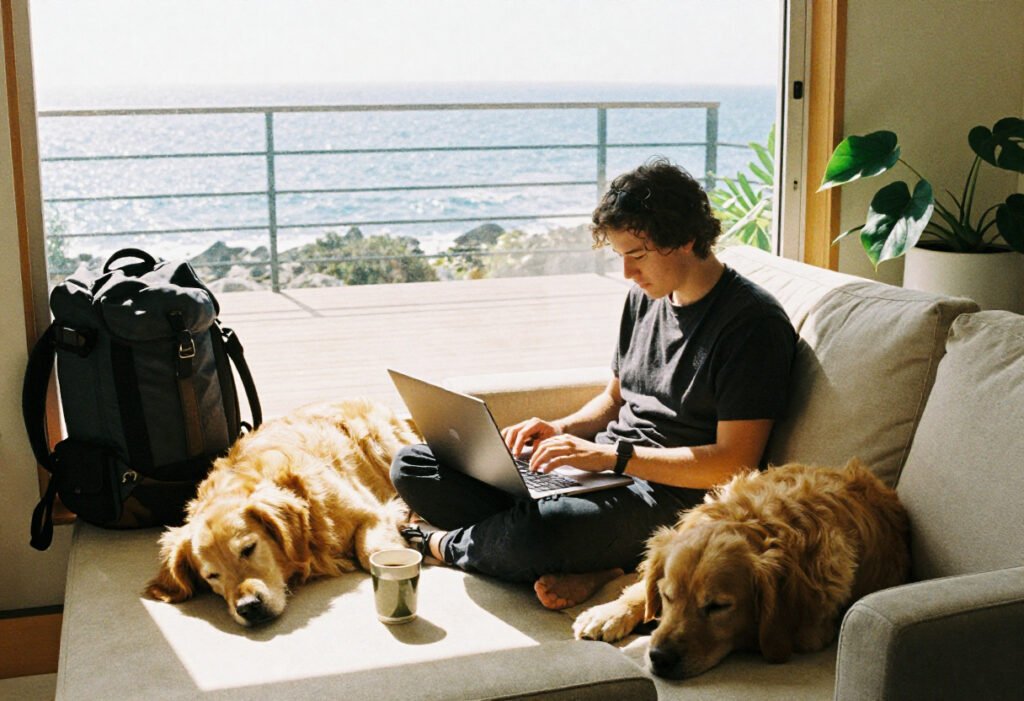
Right now I’m sitting in a three-bedroom house in rural Spain, watching someone’s two dogs while they’re visiting family. Yesterday I made breakfast in an actual kitchen—not a hostel kitchenette where someone’s always hogging the one working burner. Last month I was in a villa in southern France with a pool. Next month, probably Greece. All free. All legit. All because I figured out how to score free accommodation abroad without it being weird or unsafe.
Here’s what nobody tells you about free accommodation: it’s not actually about being cheap. It’s about accessing a completely different way of traveling that most people never discover. Sure, you save thousands—I’ve probably saved $6,000+ so far—but the real value is living in places like an actual person, not a tourist passing through. Real neighborhoods. Real routines. Real connections with locals and other travelers who get it.
I’m going to show you exactly how this works, which platforms are legit versus which ones waste your time, how to actually get accepted for opportunities, and most importantly—how to do this safely without ending up in nightmare situations. Whether you want to try it for two weeks or build an entire lifestyle around it like I accidentally did, this stuff genuinely works.
👉 Want to stretch your whole travel budget? Check out Budget Travel Tips for Digital Nomads
Why Accommodation Destroys Travel Budgets (And Why I Refused to Accept It)
Let me hit you with some math that made me genuinely angry when I figured it out.
I was spending roughly $35 per night on accommodation across Europe. Seemed reasonable, right? Hostels mostly, occasional cheap Airbnb when I couldn’t handle another night of someone snoring three feet from my face. Budget travel, very responsible.
$35 × 30 days = $1,050 per month. Just for a bed. Not food, not transport, not actually doing anything fun—just sleeping somewhere.
Over six months, that’s $6,300. For accommodation that was often genuinely terrible. Thin mattresses. Shower shoes required. That one hostel in Berlin where the guy in the bunk below me kept singing opera at 2am. I could tell you stories.
Meanwhile my travel buddy Sarah—who’s the one who told me about house sitting—was living in actual homes. Kitchens where she could cook real food instead of eating out constantly. Laundry machines. Space to work since she’s remote. Private bedrooms. Often with pets, which she loved. All free.
I remember having this moment where I calculated what I’d saved if I’d known about this from the start. Nearly seven grand. Seven thousand dollars I literally just gave to hostels and budget hotels for the privilege of uncomfortable beds and no privacy. That money could’ve funded another six months of travel in Southeast Asia.
That’s when I got serious about learning how to score free accommodation abroad. Not as some extreme budget hack, but as basic common sense.
The Hidden Costs Nobody Talks About
The sticker price is only part of what you’re actually paying. All this other stuff adds up fast:
Tourism taxes that appear at checkout. Surprise, it’s actually $40 not $35.
Cleaning fees on Airbnb that are sometimes $75 on top of the nightly rate. For a studio apartment you could clean yourself in 20 minutes.
Service fees from booking platforms. That $25 room costs $30 after Hostelworld or Booking.com takes their cut.
Location premiums. Want to stay somewhere actually convenient? Double the price. Stay somewhere cheap and inconvenient? Waste money on transport getting anywhere.
Minimum stay requirements for monthly discounts. Good luck finding those if you’re traveling flexibly.
And here’s the thing that really got me: budget accommodation is often legitimately bad. You’re paying to sleep poorly, shower in questionable conditions, store everything in a tiny locker because theft is a real concern, and have zero personal space or privacy.
Free accommodation through house sitting, work exchange, or hosting networks? You get better quality accommodation than you’d pay for while spending nothing. That doesn’t make sense mathematically but it’s completely true.
💰 More money strategies: How to Save Money Without Sacrificing Lifestyle
Method 1: House Sitting (My Personal Favorite)
House sitting is what changed everything for me. The concept seemed weird at first—strangers let you live in their house just because you’ll watch their pets and water their plants? But once you understand how it works, it makes total sense.
Homeowners need someone reliable when they travel. They want their pets cared for, plants alive, mail collected, house secure. Professional pet sitters cost $50-100 per day. House sitters do it free in exchange for accommodation. Both sides win.
How I Actually Got Started
First sitting gig I applied to, I got rejected. Second one, rejected. Third, fourth, fifth—all rejected. Started getting discouraged. Then I figured out what I was doing wrong.
My profile was garbage. Generic description, one mediocre photo, no references. Why would anyone trust me with their house? I looked like every other person mass-applying to everything.
I redid my entire profile. Better photos—actually smiling, not like a passport photo. Wrote about my actual experience with pets, not just “I like animals.” Got references from friends whose pets I’d watched back home. Explained my travel style, showed I’m responsible without sounding boring.
Seventh application—Portugal, three weeks, two dogs, beautiful house near Porto—accepted. That sit changed my entire travel trajectory.
Platforms That Actually Work
TrustedHousesitters is where I’ve found most of my sits. Yeah, it costs $130 annually, but one sit pays that back immediately. You get access to thousands of listings worldwide, insurance is included, verification system is solid, and the community is active and helpful.
MindMyHouse is cheaper—around $20-30 yearly—but fewer listings. Good for supplementing TrustedHousesitters when you want more options.
House Carers is strong in Australia and New Zealand if that’s your region. Around $50 annually.
What It’s Actually Like
Current sit: three-bedroom house, two golden retrievers, village in Spain. Daily routine is walk dogs morning and evening (30 minutes each), feed them twice, generally keep house clean, water outdoor plants. Maybe 90 minutes daily of actual responsibility.
Rest of the time? It’s my house basically. Cook meals in a real kitchen. Work at the dining table without twelve other people on Zoom calls around me. Watch Netflix on their big TV. Use their washing machine instead of paying €6 at laundromats. Explore the surrounding area knowing I have a comfortable home base to return to.
Previous sits have included:
- Four weeks in rural France watching one very lazy cat
- Two weeks in Italy caring for a small garden and collecting mail
- Three weeks outside Lisbon with two dogs who were honestly better company than most humans
- Currently this Spain situation
The pets are usually the best part honestly. I’m traveling solo, so having dogs greet me when I come home or a cat that sits on my lap while I work? That’s worth something psychologically you can’t really quantify.
Real Talk About Downsides
It’s not perfect. You’re responsible for living things, which means you can’t just disappear for three days. Day trips are fine, but overnight travel during sits is complicated unless the homeowner specifically says it’s okay.
You’re also competing with lots of other sitters, especially for sits in popular locations or luxury homes. Building your reputation takes time. Those first few sits might be less glamorous locations while you get reviews.
And occasionally things go wrong. One sit, the washing machine flooded the kitchen. Another, one of the dogs ate something and needed emergency vet care. You’re handling real-life problems in houses that aren’t yours, which can be stressful.
But honestly? Still better than hostels. And homeowners appreciate good sitters so much that they often write glowing reviews, invite you back for future sits, or recommend you to their friends. That’s how I’ve gotten several sits—previous homeowners vouching for me.
🏠 Travel gear tips: Affordable Travel Gear Every Budget Explorer Needs
Method 2: Work Exchange (For When You Want More Than Just Accommodation)
Work exchange is different from house sitting. Instead of caring for a house, you’re working for a host—could be hostel, farm, eco-project, family, small business—in exchange for accommodation and usually meals too.
I tried this before house sitting actually. Spent three weeks at a hostel in Seville helping with reception and social media in exchange for a bed and breakfast. Worked maybe 4-5 hours daily, had afternoons and evenings free, met tons of other travelers, and saved probably $400 that month while getting to know Seville way better than if I’d just stayed in a hostel as a guest.
How It Actually Works
Sign up on a platform, browse opportunities, apply to ones that sound interesting. Each host sets their own expectations—hours per day, days per week, what work involves, what they provide. You discuss details, agree on terms, show up, work your agreed hours, get free accommodation and usually food.
Work varies wildly:
- Hostel reception (answering questions, check-ins, maintaining social media)
- Farm work (planting, harvesting, animal care, general farm maintenance)
- Teaching English (conversation practice, usually with families)
- Eco-projects (building, conservation work, permaculture)
- Helping with small businesses (cafes, guesthouses, tour companies)
Workaway is the biggest platform. Annual membership is $49. Thousands of opportunities worldwide. Clear expectations, reviews from previous volunteers, direct messaging with hosts. This is where I found my Seville hostel gig.
WWOOF focuses specifically on organic farms. If you like the idea of outdoor work, learning sustainable agriculture, eating incredibly fresh food, and being in nature, this is your thing. Memberships are country-specific, usually $20-40.
HelpX is similar to Workaway but includes more diverse opportunities—artists needing help with studios, musicians, creative projects. Two-year membership is around $20.
Worldpackers is growing fast, especially strong in Latin America. Around $49 annually. Interface is nice, opportunities often include extra perks like Spanish lessons or activities.
What I Learned From Work Exchange
That Seville hostel gig taught me that free accommodation could actually be more fun than paid accommodation. Instead of showing up to a hostel as a guest where you’re just another face, I was part of the team. Organizing pub crawls, recommending restaurants, helping people figure out their travel plans.
Made genuine friends with other volunteers and staff. Got invited to local parties and events I’d never have known about as a regular tourist. Learned basic hostel management skills. Improved my Spanish significantly because I was speaking it daily with locals and Spanish travelers.
The work was easy—check people in, answer basic questions, post Instagram stories about hostel events, keep common areas tidy. Four hours daily maximum. Way easier than the cafe job I had back home that paid minimum wage and sucked my soul.
The Reality Check
Work exchange isn’t always amazing. Quality varies massively depending on hosts. Some are organized, fair, treat volunteers well. Others are chaotic, expect way more work than agreed, provide poor accommodation.
Reading previous volunteer reviews is crucial. If someone says “host was unclear about expectations and work hours kept increasing,” that’s a massive red flag. If reviews consistently mention great food, fair hours, comfortable accommodation—probably legit.
My Seville situation was genuinely good. Other volunteers I’ve met had nightmare experiences—hosts expecting 8+ hour days, terrible sleeping conditions, no food provided despite promises. When it’s bad, you need to be willing to leave rather than stay somewhere exploiting you.
Start with shorter commitments—two weeks, maybe three—until you know if it’s working. Longer commitments only after you’ve confirmed the situation matches what was advertised.
💼 Working remotely too? Remote Jobs for Travelers: Work and Explore the World
Method 3: Couchsurfing & Hospitality Networks (Best for Short Stays)
Couchsurfing is legendary in budget travel circles, but I was skeptical honestly. People just… let strangers sleep at their house for free? For no reason? Sounded either too good to be true or vaguely dangerous.
Then I tried it in Prague when I had a three-day gap between sits. Host was a graphic designer who’d traveled extensively and wanted to pay forward the hospitality he’d received. Gave me his couch, showed me around Prague’s neighborhoods tourists don’t visit, took me to his favorite local bars. Zero money exchanged. Just cultural exchange and good conversation.
It was strange at first—being in someone’s personal space, fitting into their routine, being “on” socially when sometimes you just want silence. But also? Way more interesting than any hostel stay I’ve had.
How This World Works
Couchsurfing is the biggest hospitality network. Millions of members globally. The basic premise: locals offer travelers a couch, spare room, or even just floor space for a few nights. Completely free. No money, no work exchange—pure cultural exchange and friendship.
You create a profile explaining who you are, your interests, why you travel. Search for hosts in your destination. Send personalized requests—not generic copy-paste messages—explaining why you want to visit their city and what you can offer (conversation, cooking, language exchange, whatever).
If they accept, you show up, stay a few nights, hang out if they’re interested in that or give them space if they prefer. Leave a review afterward. That’s it.
BeWelcome is similar but completely free forever (Couchsurfing has optional verification fees). Smaller community but very dedicated hosts focused on cultural exchange over everything else.
Trustroots is newer, totally free, designed by travelers for travelers. Clean interface, growing community especially in Europe.
Servas is the oldest—started in 1949 as a peace organization. Small annual fee, interview required for membership. Very trustworthy but more formal.
What You Need to Know
Couchsurfing isn’t sustainable for long-term travel. Most hosts offer 1-3 nights, occasionally up to a week. It’s perfect for:
- Short city visits between longer accommodation arrangements
- Meeting locals who can show you around
- Getting insider perspective on cities you’re visiting
- Cultural exchange when you’re craving human connection
It requires social energy. You’re in someone’s personal space, often participating in their life, meeting their friends, going to events. If you’re an introvert (like me), this can be exhausting after a while. I use Couchsurfing strategically—a few nights here and there—not as my primary accommodation method.
The other thing: you need to take safety seriously with Couchsurfing. Always:
- Only contact verified hosts with multiple positive reviews
- Video chat before confirming stays
- Share host details with friends/family
- Trust your gut completely—weird vibes mean decline politely
- Have backup accommodation funds in case you need to leave
Most experiences are genuinely positive. Occasionally situations feel uncomfortable. Being able to leave without financial stress is important.
🌍 Finding the right places: Top Budget-Friendly Destinations
Method 4: Home Exchange (Perfect If You Have Your Own Place)
Home exchange is brilliant but requires something most long-term travelers don’t have: a home to exchange.
The concept: you swap houses with someone for a set period. They stay in yours, you stay in theirs. Both get free accommodation. No money changes hands.
I haven’t personally used this because I don’t have a home base currently, but my friend Kate does this constantly. She owns an apartment in London, works remotely, uses home exchange to travel basically for free several times yearly. Last year she stayed in homes in Barcelona, Berlin, Copenhagen, and Lisbon—all free because people wanted to visit London.
HomeExchange is the biggest platform. Annual membership around $150. Thousands of homes in 150+ countries. Insurance included, verified listings, guest points system for flexible exchanges.
Love Home Swap is strong in Europe and North America. Around $120 annually. Includes non-simultaneous exchange options using points.
GuestToGuest uses points-based system allowing non-simultaneous exchanges, which gives you way more flexibility. Membership around $130.
Why This Works Great
Entire home or apartment to yourself. Full kitchen, laundry, comfortable living spaces. Real neighborhoods where locals live. Often includes amenities like cars, bikes, local tips from exchange partners.
Quality is usually high because both parties are invested in keeping their homes nice. Nobody wants bad reviews preventing future exchanges.
Great for families or couples who want comfort and space. Way better than hotels or Airbnbs for longer stays.
The Downside
Obviously, you need a home to exchange. Not useful if you’re full-time traveling or don’t own property.
Annual membership fees ($100-150) even though exchanges themselves are free.
You need to prepare your home for guests—clean thoroughly, remove valuables, leave instructions.
Coordinating schedules with exchange partners can be tricky.
Some anxiety about strangers in your home, though reviews and verification help with this.
Alternative for non-homeowners: NightSwapping lets you earn nights by hosting people when you ARE home, then use accumulated nights to stay free anywhere. Clever system.
📱 More helpful tools: Best Travel Apps to Save Money
Staying Safe While Doing This Stuff
I’m going to be real with you: most people won’t try free accommodation because they’re scared. And honestly? That’s fair. Staying in strangers’ homes, relying on hosts you’ve never met, trusting platforms you’ve just discovered—it feels risky.
But so is crossing the street. Everything involves some risk. The question is whether you’re managing that risk intelligently or just avoiding everything out of fear.
I’ve done this for eight months across multiple countries. Zero bad situations. Not because I’m lucky—because I follow safety principles consistently.
Non-Negotiable Safety Rules
Only use established platforms with verification, reviews, and protection systems. Never arrange stays through random Facebook posts or sketchy websites. Stick to TrustedHousesitters, Workaway, verified Couchsurfing hosts.
Video chat before committing to anything. See the person’s face, hear their voice, check if vibes feel right. Scammers avoid video calls. Legitimate hosts understand this request.
Read every single review from previous guests/volunteers. One bad review might be personality clash. Multiple bad reviews mean real problems. Trust patterns, not exceptions.
Share your plans with friends or family. Send them host contact info, address, dates, and check in regularly. Someone always knows where I am and when to expect updates.
Trust your gut without overthinking. Something feels off? Decline politely. You don’t owe explanations. Your comfort and safety matter more than not wanting to seem rude.
Keep emergency funds accessible. Have enough money available to book alternative accommodation immediately if needed. This removes pressure to stay somewhere you don’t feel safe.
Red Flags I’ve Learned to Spot
Requests for payment outside platforms. Massive red flag. Legitimate hosts never ask for money through PayPal, bank transfer, cash apps before you arrive.
Pressure to decide immediately. Real opportunities don’t require instant decisions. Pressure indicates either scam or problematic host.
Too perfect to be true. Luxury villa, zero responsibilities, amazing location—but no reviews and new profile? Probably fake listing.
Reluctance to video chat or answer basic questions. If someone avoids simple verification requests, that’s your answer.
Inconsistent or vague information. Details changing between messages, avoiding specifics about what you’ll be doing, unclear expectations—these are warnings.
I’ve declined probably 20-30% of potential opportunities because something felt off. Sometimes I can’t even articulate what specifically bothered me—just intuition saying “no thanks.” And that’s fine. Better to miss good opportunities than ignore warning signs.
🏥 Protect yourself: Travel Insurance Hacks for Budget Travelers
Which Method Actually Fits Your Travel Style?
Here’s what I wish someone told me at the start: not every free accommodation method works for everyone. Your personality, travel goals, and comfort with various trade-offs determine what actually works for you.
I love house sitting because I’m an introvert who needs space and quiet to work. My friend Sarah prefers work exchange because she’s social, loves meeting people, wants purpose beyond just traveling. Another friend swears by Couchsurfing because he’s extroverted and thrives on constant new social interactions.
Quick Personality Matching
You value privacy, comfort, and routine: House sitting or home exchange. Entire places to yourself, establish routines, comfortable living.
You’re social and love meeting new people constantly: Couchsurfing, work exchange in social environments like hostels. Constant interaction, new friendships daily.
You want purpose and meaning alongside travel: Volunteering through WWOOF, eco-projects, teaching. Contributing to something larger than yourself.
You’re spontaneous and flexible: Couchsurfing, short-term work exchanges. Last-minute opportunities, constant variety.
You love animals: House sitting with pets exclusively. Get your animal fix while saving money.
You need productive workspace for remote work: House sitting, home exchange. Reliable internet, proper work setup, quiet environment.
Platform Comparison (From My Experience)
| Method | Time Commitment | Social Energy | Best For | Biggest Pro | Biggest Con |
|---|---|---|---|---|---|
| House Sitting | Medium (weeks) | Low | Introverts, digital nomads | Entire homes, privacy | Annual fees, competition |
| Work Exchange | Medium (2-4 weeks) | Medium-High | Social travelers | Meals included, immersion | Time commitment |
| Couchsurfing | Low (1-3 nights) | High | Extroverts, spontaneous | Completely free, local insights | Short stays, variable quality |
| Home Exchange | Medium (1-4 weeks) | Low | Homeowners | Mutual trust, comfort | Need property to exchange |
| WWOOF | Medium (2-4 weeks) | Medium | Nature lovers | Fresh food, outdoor work | Physical labor |
This isn’t scientific. Just patterns I’ve noticed from my experience and talking with dozens of other travelers doing this stuff.
How I Actually Use This
I don’t rely on just one method. I combine them strategically:
Months 1-2 (Spain): House sitting (current situation) Month 3 (Greece): Work exchange at eco-farm (2 weeks) + Couchsurf Athens (3 nights) + house sitting island (2 weeks) Month 4 (Italy): House sitting (4 weeks) Month 5 (Back to Spain): Different house sit (3 weeks)
This gives me variety, keeps things interesting, provides different types of experiences. Long house sits give me stability and routine. Short Couchsurfing stays add spontaneity and social interaction. Work exchanges break up monotony and add purpose.
Most long-term travelers I know who successfully live on free accommodation use similar mixed approaches rather than committing to just one method forever.
💵 Managing money: How to Manage Your Finances While Traveling
The Actual Numbers (Because Money Matters)
Let me show you real math from my last six months of travel.
Traditional Budget Travel Approach
This is what I spent the first six months before discovering free accommodation:
- Accommodation: $35/night average = $6,300
- Food: $25/day (eating out mostly) = $4,500
- Transport: $1,200
- Activities: $800
- Misc: $400 Total: $13,200
That’s $2,200 monthly. Not sustainable long-term on my savings without working full-time.
Free Accommodation Approach (Last 6 Months)
- Accommodation: $0
- Platform fees: $180 (TrustedHousesitters, Workaway)
- Food: $15/day (cooking most meals) = $2,700
- Transport: $1,100
- Activities: $1,800 (way more budget available!)
- Misc: $300 Total: $6,080
That’s roughly $1,000 monthly. Less than half my previous spending. And honestly? Better quality of life.
I saved $7,120 in six months. That’s enough to:
- Fund another 7 months of travel at current spending
- Splurge on activities I’d skip before
- Build actual savings while traveling
- Have emergency funds for peace of mind
But it’s not just money. The intangible benefits matter more than I expected.
What Money Can’t Buy
Free accommodation gave me things I wouldn’t get in hostels or hotels:
Real local connections. Homeowners introduce me to neighbors. Work exchange hosts invite me to family events. Couchsurfing hosts show me their favorite hidden spots.
Insider knowledge. Where locals actually eat (not tourist traps). Which neighborhoods are safe. Current events and local perspectives. Cultural context you don’t get from guidebooks.
Comfort and routine. Real kitchens where I cook proper meals. Laundry machines. Space to work properly. Quiet when I need it. Privacy when I want alone time.
Purpose and meaning. Volunteering feels meaningful. Caring for pets gives structure. Cultural exchange creates genuine friendships.
Skill development. I’ve learned farming basics, improved Spanish dramatically, picked up hostel management skills, gotten comfortable with dogs (was previously a cat person).
These benefits exceed the financial savings, which is saying something because the financial savings are massive.
🌏 Regional budget guides: Travel Europe on a Budget | Budget-Friendly Travel Destinations in Asia
Real Talk: When This Doesn’t Work
Let me be honest about situations where free accommodation isn’t the answer, because it’s not perfect for everyone all the time.
When You Should Just Pay
You’re exhausted and need zero obligations. Sometimes after weeks of responsibility, you just need a hotel where nobody requires anything from you. That’s fine. Buy yourself a week of being completely lazy.
Arriving in new countries jet-lagged. First night somewhere unfamiliar, different time zone, exhausted from travel—pay for a simple hostel near the airport. Navigate to free accommodation when you’re coherent.
Short trips where logistics don’t make sense. Three-day city break? Maybe just book a hostel rather than coordinating house sitting or Couchsurfing for such brief stays.
Your mental health needs privacy. If you’re introverted and burning out from constant social situations, pay for private accommodation to recharge. Mental health matters more than savings.
Safety concerns. Trust your gut. If free options available don’t feel safe, pay for something you’re comfortable with.
I still occasionally pay for accommodation when situations call for it. Usually 2-3 nights monthly. Keeping some accommodation budget available provides flexibility and removes pressure to stay in uncomfortable situations just because they’re free.
The Lifestyle Isn’t For Everyone
Some travelers try this and genuinely don’t like it:
You value spontaneity above everything. House sitting requires advance planning and commitments. Can’t suddenly decide to leave early without screwing over homeowners.
You hate any form of responsibility. Even light responsibilities like watering plants stress some people out. That’s okay—hostels exist for a reason.
You’re deeply private and uncomfortable in others’ spaces. Some people just can’t relax in houses that aren’t theirs or when sharing space with hosts.
You travel with partners/groups with different preferences. Coordinating free accommodation gets complicated with multiple people’s needs and preferences.
You move extremely fast between destinations. If you’re visiting a new city every 2-3 days, free accommodation logistics probably aren’t worth the effort.
Knowing what works for your personality and travel style is more important than forcing yourself into situations that make you miserable just to save money.
Final Thoughts From 8 Months of Free Accommodation
Here’s what I’ve learned: free accommodation isn’t a budget hack you use once or twice. It’s an entirely different approach to travel that some people love and others don’t vibe with at all.
For me, it’s transformed travel from something I could do occasionally into a sustainable lifestyle I can maintain indefinitely. Not because I’m wealthy—because I eliminated my largest expense while improving my quality of life.
The money savings are obviously huge. But honestly, the lifestyle benefits matter more. Living in real neighborhoods, not tourist zones. Cooking meals in actual kitchens instead of surviving on granola bars and street food. Having routines and stability even while constantly moving. Making genuine connections with locals and other travelers who share similar values.
It requires more effort than booking hotels. You research platforms, build profiles, apply to opportunities, video chat with hosts, coordinate logistics, take on responsibilities. Some people find that exciting. Others find it exhausting. Both responses are completely valid.
My advice: try it for a few weeks. Apply to some house sits or work exchanges. Couchsurf for a few nights. See how it actually feels, not how it sounds in theory. You’ll know pretty quickly if this lifestyle fits you.
If it does? Welcome to a way of traveling most people never discover. You’ll save thousands of dollars, have way better accommodation than you’d pay for, and experience places as more than just a tourist passing through.
If it doesn’t? That’s fine too. Budget hotels and hostels exist. Use them without guilt. Travel is supposed to be enjoyable, not constant stress about optimizing every single decision.
Whatever you choose, at least now you know how to score free accommodation abroad if you want to. The opportunities exist. The systems work. Whether you use them is entirely up to you and what kind of travel experience you’re trying to create.
👉 Ready to explore more budget strategies? Check out XRWXV for everything about traveling smarter and spending less.