There I was, squeezed onto this tiny plastic stool at a Bangkok night market—you know the kind that’s absurdly low to the ground and makes you sit with your knees practically touching your chin. This woman’s working a wok in front of me, flames shooting up everywhere like she’s trying to summon something. She slides over a plate of pad thai. Forty baht, which is what, maybe a dollar twenty?
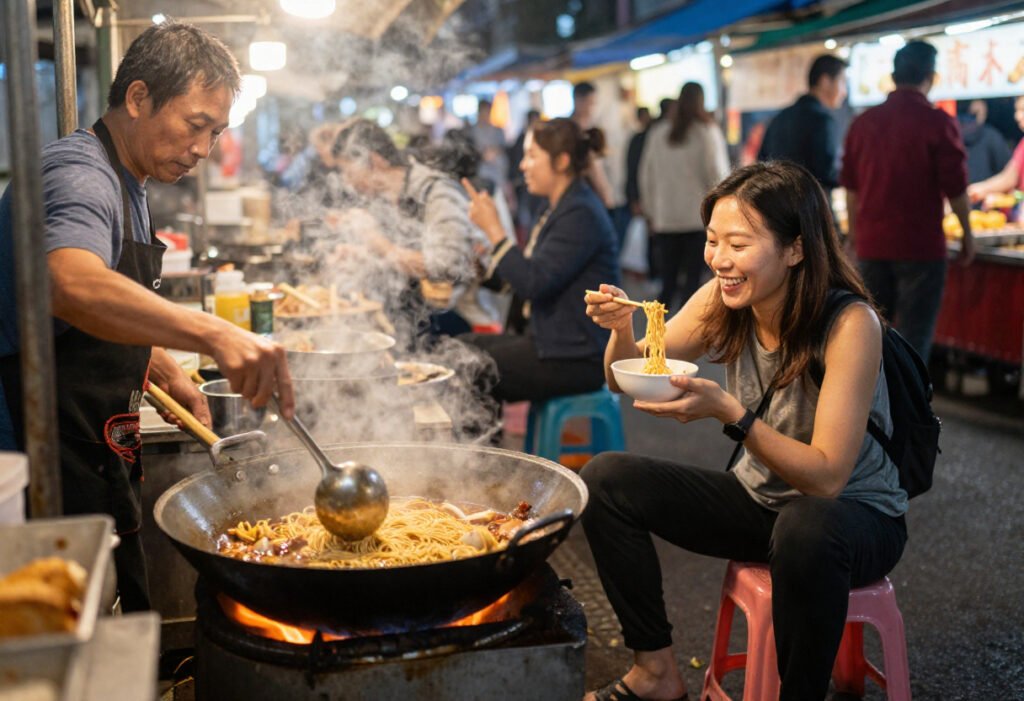
I’ve dropped $25 on pad thai at some trendy spot back home. This version? Blew it completely out of the water. Not even close. She just threw in extra lime without me asking, people around me were deep in some heated conversation in Thai, kids were running around being chaotic, and for the first time all week I didn’t feel like THE TOURIST. Just some person eating dinner on a regular Tuesday night.
Most people approach food so weird when they’re traveling cheap. They’re hoarding granola bars from home, making depressing sandwiches from whatever random stuff the hostel has, maybe hitting McDonald’s because “at least I know what I’m getting.” All this while walking right past incredible food that costs less than a Starbucks.
Here’s the thing nobody mentions: your best meals traveling will probably be your cheapest ones. Not every single time—sure, sometimes you’ll splurge on something nice and it’ll be worth it. But way more often than you’d expect, the food that actually stays with you comes from street carts, these tiny family places with handwritten menus that are half illegible, markets where you’re basically just pointing and hoping.
This isn’t me being all preachy about “authentic travel” or whatever. And you’re definitely not choking down bland food just to save cash. You’re literally eating BETTER while spending LESS, which sounds fake until you actually experience it. That fancy place near the big tourist attraction? Usually disappointing and overpriced. Random street cart three blocks away where nobody speaks English? Life-changing.
I’m going to show you where to find the best food experiences for budget travelers, how to not get sick without being paranoid, and why your favorite travel stories will probably involve meals that cost under five bucks. First trip or you’ve been hostel-hopping for years—doesn’t matter. Food is honestly how you actually connect with places instead of just looking at them.
👉 Trying to stretch your whole budget? Read How to Travel Europe on a Budget
Why Food Is the Heart of Travel
Ask someone their favorite travel memory. I’ve done this probably hundreds of times. Know what almost never happens? They don’t go on about some famous statue or that museum TripAdvisor said was essential.
Pretty much every time, they tell you about food.
Could be curry they shared with random people in some Mumbai apartment. Or this one bakery in Paris where the croissants were so stupid good they went back three mornings straight. Street tacos in Mexico City that fundamentally rewired their brain about what tacos even are. Food memories stick around way after “yeah I saw the Eiffel Tower” fades into nothing.
Why Eating Where Locals Eat Changes Everything
Something happens when you’re eating where actual locals eat—you stop performing this whole “tourist” thing for a second. You’re just a person having lunch. That woman making your noodles has been tweaking that recipe for probably thirty years. The fruit vendor knows exactly which mangoes are perfect today versus which ones need two more days.
These aren’t people putting on some cultural performance. This is just their normal life, and you get to be part of it for twenty minutes while you eat.
You pick up stuff at these places that guidebooks would never tell you. What time families in this neighborhood eat dinner. Which vegetables are actually in season right now versus imported. How people here take their coffee. It’s basically like doing anthropology research except way tastier and you don’t need a degree.
Also—and I know this sounds cynical but it’s true—tourists get absolutely destroyed on price. That “totally authentic Italian restaurant” near the Colosseum charging €25 for pasta that’s honestly just okay? Walk three blocks in literally any direction and actual Romans are eating better carbonara for €9 at some place with plastic tablecloths and a waiter who looks like he’s been there since 1987.
💡 Pro tip: Learn to Avoid Tourist Traps and Save Money while eating better
Some Budget Travel Myths Need to Die Already
Somehow everyone got this idea that budget travel means suffering through bad food. Like you’re supposed to live on instant noodles and feel virtuous about your sacrifice or something. Which is completely backwards when you think about it, because some of the world’s most famous cuisines—Thai, Vietnamese, Mexican, Indian—are built entirely on street food that costs basically nothing.
Thailand? You can eat spectacular food three times a day for maybe ten bucks total. Mexico City? The best tacos come from carts, full stop. Vietnam? That pho that’ll ruin all other pho for the rest of your life costs two dollars maximum.
Budget travel doesn’t equal bad food. Usually it means you’re eating the food that actually matters, the stuff locals genuinely care about, instead of some watered-down tourist version designed for people afraid of spice.
Food Gets You In
The best food experiences for budget travelers almost always need courage. Trying something when you literally cannot read the menu. Eating at a place where you’re obviously the only foreigner and everyone’s kind of staring. Some person you met twenty minutes ago invites you to their house for dinner and you have to decide real quick if that’s brilliant or a terrible idea.
These moments feel uncomfortable when they’re happening, right? But then they turn into the stories you tell forever.
Food doesn’t care if you speak the language or understand customs perfectly. It’s weirdly universal. You can sit down knowing absolutely nothing about where you are, and by the time you’re done eating, you understand something real about the place. Not like historical facts—something you can only get through actually sharing an experience with people.
Here’s what’s wild: prioritizing food experiences doesn’t cost extra. It SAVES money. Those overpriced restaurants clustered around landmarks? Consistently mediocre. The street cart three blocks away that only locals know about? Amazing and cheap. The universe genuinely seems to reward eating like locals instead of tourists.
🌍 Budget destinations: Check out Top Budget-Friendly Destinations for food paradise locations
Affordable Food Adventures Around the World
The best food experiences for budget travelers aren’t hiding in restaurants with extensive wine lists and mood lighting. They’re in alleys and markets and neighborhood spots where the only English anybody speaks is “hello” and “thank you.”
Street Food Gems
Street food isn’t some consolation prize because restaurants are too expensive. In most of the world, street food IS the food. What regular people actually eat every day. Recipes passed through families. Techniques perfected over literal decades. Real food made by people who care deeply, because their entire reputation lives and dies with the twenty customers showing up at lunch.
Why This Works
One: Absurdly cheap. Like $1-5 for a full meal in most places.
Two: Fresh because you’re watching someone cook it directly in front of you.
Three: Zero pretense. Nobody’s creating an “experience.” They’re making food how it’s supposed to be made, period.
Quality control is built right in. Bad street stall? Out of business in a week. That cart’s still there with locals lining up every single day? That’s your five-star review. People voting with their actual money and lunch break.
Where This Actually Thrives
Southeast Asia ruins street food everywhere else forever. Bangkok has vendors making the same pad thai from the same cart for thirty years. Hanoi has women who make ONE type of banh mi—nothing else—costs $1.50, and honestly might be the best sandwich that exists anywhere. Malaysia’s hawker centers are basically temples worshipping affordable delicious food.
My buddy spent three weeks in Vietnam eating only street food. Breakfast pho ($1.50), lunch banh mi ($1), dinner whatever looked good ($2-3). Total food budget for three weeks? Around ninety bucks. THREE WEEKS of eating incredibly well for ninety dollars. That’s not normal.
Mexico and Central America understand street food on this almost spiritual level. Real tacos al pastor from a street cart—where they shave meat off that vertical spit with pineapple on top—costs maybe $1.50 each. Eat three, you’re stuffed, you spent under five bucks, and you’re having what honestly feels like a religious experience. Meanwhile tourists drop $15 on objectively worse versions at places with English menus.
Guatemala has pupusas for like 75 cents. Thick handmade tortillas stuffed with cheese and beans. Incredible. Old women make them fresh right while you’re standing there. Food at its most honest.
Middle East nails “fast, cheap, ridiculously delicious.” Falafel wraps in Egypt or Jordan run $2-3 and they’re massive. Perfectly crispy falafel, fresh vegetables, tahini, pickles, everything in flatbread that’s still warm. You can genuinely eat like royalty on ten bucks a day.
India is overwhelming in the absolute best way. Mumbai’s vada pav—spicy potato fritter in bread—costs maybe 50 cents. Delhi’s chaat is a dollar and it’s addictively tangy and crispy and hits every flavor note simultaneously. The complexity is almost offensive considering you paid basically nothing.
🍜 Regional guide: Planning Asia? Read Backpacking Southeast Asia on a Budget and Budget-Friendly Travel Destinations in Asia
How to Do This Without Messing Up
Follow crowds, but not tourist crowds. Office workers on lunch break especially. They eat the same spots every day. They’re not wasting money on bad food.
High turnover matters more than people realize. Food sitting around getting sad and cold? Skip it. You want the place constantly cooking because customers keep showing up and buying everything.
Language barriers aren’t problems. Pointing works. Smiling works. Holding up fingers for “one please” works. Some of my best meals happened when I had zero idea what I’d ordered until it appeared.
Always bring small bills. Street vendors usually can’t make change for large notes and nobody wants that awkward situation.
👉 More budget strategies: Budget Travel Tips for Digital Nomads
Local Markets & Home Dining
Markets aren’t just where you buy stuff. They’re where you see how a place actually functions. The rhythm. Who’s buying what. How people interact. What’s in season. What things genuinely cost when locals pay.
The food? Usually fantastic. Always cheap.
Why Markets Hit Different
Markets have this energy restaurants can’t match. Vendors shouting prices. People haggling in languages you don’t understand. Someone somewhere is always grilling something that smells incredible. Chaotic and loud and kind of perfect.
Most have food stalls or tiny restaurants tucked in corners. Not designed for tourists—they’re for vendors themselves, people shopping, local workers grabbing lunch. Which means food has to be legit and prices have to be real or people just wouldn’t come.
Eating at Stalls
Find stalls with plastic tables and chairs. Usually serving one or two things—rice with curry, noodle soup, grilled meat with vegetables. Menu probably doesn’t exist in English. That’s fine. Look at what others are eating. Point. Hold up one finger. Done.
These meals typically cost $2-5. Generous portions. Fresh ingredients because they bought them at the market that morning. Proper cooking because their reputation depends on it. Zero tourist markup because tourists don’t usually know these stalls exist.
Madrid’s markets have spots where actual market workers eat. Massive bocadillo and coffee for under €4. Not the fancy stalls in the center where tourists take photos. Those are traps. The boring-looking places on the edges.
Shopping and Cooking
If your place has even a tiny kitchen, markets become your secret weapon. Amazing meals for almost nothing.
Fifteen bucks at a decent market gets you:
- Vegetables for several meals: $4
- Local cheese or meat: $5
- Really good bread: $2
- Whatever fruit’s in season: $3
- Maybe olives or extras: $1
That’s dinner tonight, lunch tomorrow, snacks for days. Fifteen dollars at a restaurant gets you one meal. Maybe.
💰 Save more: Learn How to Save Money Without Sacrificing Lifestyle
Home Dining
Most budget travelers don’t know: you can eat at someone’s actual home without being weird about it.
EatWith and BonAppetour connect travelers with locals who cook. Pay $20-40, show up at their apartment, eat real home-cooked food with other guests, have actual conversations with people who live there. Yeah, more than street food. But you’re getting multiple courses, conversation, insider knowledge, an experience that sticks with you way longer than another restaurant.
Couchsurfing has events even if you’re not staying with anyone. People organize potluck dinners constantly. Bring something, eat, talk, hang out. Free and you’ll probably make friends.
Market Tips
Go early. Sun-barely-up early. Everything’s freshest and vendors haven’t gotten tired. Plus you avoid crowds.
Bring reusable bags. Makes you look less like a tourist. Vendors notice.
Learn three phrases. “How much?” and “Thank you” in the local language goes surprisingly far. People appreciate effort even if your pronunciation is terrible.
Watch what locals buy. Everyone going to one fruit vendor? There’s a reason. Follow collective wisdom.
Cooking Classes & Cultural Exchanges
Cooking classes sound expensive. But think about it—you’re paying for a meal, entertainment, education, and cultural immersion all at once. Plus learning recipes for life. That’s actually decent value.
Why These Are Worth It
Most classes end with eating what you cooked. So you’re not just paying for instruction—you get a full meal too. A $30 class including a three-course dinner isn’t really expensive when you break it down.
Unlike a restaurant meal that’s over in an hour, skills come home with you. Now you can make authentic pad thai. Handmade pasta from scratch. Proper tagine. Those recipes follow you forever, extending the trip indefinitely in a weird way.
Best part is the people. You’re cooking with locals who tell grandmother stories and explain why they use certain ingredients and share family knowledge. That cultural transmission doesn’t happen at museums.
Finding Affordable Classes
Skip fancy schools targeting cruise tourists. Look for community-run stuff. Thai temples sometimes offer cooking for donations. Small Italian towns have associations running pasta workshops for basically nothing.
Market tour plus cooking combos are great. Morning walking through markets with a local chef, buying ingredients, asking questions about everything. Then cooking it all. Usually $30-60 and absolutely worth it.
Real examples:
- Chiang Mai: $15-25, includes market tour plus cooking 4-5 dishes
- Oaxaca: Traditional mole workshops $20-40
- Marrakech: Tagine classes $30-50
- Bologna: Fresh pasta €40-60
Real money, yeah. But less than one tourist-trap dinner and you get way more from the experience.
Learning Without Classes
Sometimes best education is just paying attention. Street vendors love genuine interest. Not annoying tourist selfie interest—actual curiosity. Ask questions (or try with gestures). Lots of vendors show you techniques if you’re respectful.
Some hostels let you work kitchen for free accommodation. If you’re working there, you’re learning constantly. Free housing plus culinary education? Huge win.
YouTube sounds dumb but isn’t. Watch cooking videos from wherever you’re visiting. Then at markets you’ll recognize ingredients. Ordering food, you’ll know what things are. Makes everything easier.
💼 Working while traveling? Read How to Balance Work, Side Hustles, and Travel
How to Find Authentic Eats on a Budget
Finding the best food experiences for budget travelers is research plus instinct plus wandering until something looks promising. Mostly you need to know what signs to look for.
Actually Following Locals
Everyone says this. I’m saying it again because it works if you do it right. Locals aren’t eating at places with laminated six-language menus. They’re at places with zero English, questionable furniture, lines out the door at lunch.
What You’re Looking For
Lunch rush is your indicator. Place packed with office workers noon to 1pm? That’s it. Office people know where food is fast, cheap, good. They eat the same places daily. Not there for Instagram.
Menu only in local language? Usually a good sign. They’re not trying to attract tourists. Focused on feeding locals, which means food has to be legitimately good or those customers go somewhere else.
Simple storefront beats fancy facade every time. Best food comes from places spending money on ingredients and cooking, not decoration. Plastic chairs and fluorescent lighting? Probably amazing. Exposed brick and vintage posters? Probably overpriced.
Asking Right Questions
Don’t ask “where should I eat?” Too vague. They’ll default to whatever tourist place they assume you want.
Ask specific:
- “Where do you eat lunch during work?”
- “Where does your family go for special meals?”
- “What’s your favorite breakfast place?”
Gets real answers. Where they actually go, not where they think tourists should.
Using Tech Without Being Annoying
Google Maps is surprisingly useful. Look for 4+ stars with hundreds of reviews. Trick: try reading reviews in local language if you can. Those are honest. English reviews are tourists comparing everything to home.
Filter by price. That $ symbol is your friend. High ratings plus cheap usually means locals found something special.
Instagram location tags work better than people realize. Search city plus food hashtags. Local bloggers and residents post constantly. Real prices, portions, locations. Way more useful than official tourism accounts.
Lonely Planet and Eater publish neighborhood guides separating authentic from garbage. Their writers actually live in these cities. Know the difference.
HappyCow for vegetarian/vegan options worldwide. Shows budget-friendly plant-based spots locals actually go to.
When Language Becomes Advantage
Communication barriers can lead to great food. Point-and-smile method:
Walk into busy local place. Watch what others eat. See something good? Point at it. Hold up one finger. Smile. Done. You’ve ordered.
This leads to best food experiences for budget travelers because you try stuff you’d never find on English menus. Sometimes you won’t know what you ate. Sometimes that’s the whole point.
Other Practical Stuff
Free walking tours go through food neighborhoods. Guides share where they actually eat. Mental notes, come back later.
University areas are consistent. Students can’t afford tourist prices, so campus areas have cheap, filling, quality food. Lots of international options too.
Timing matters more than you think. Lunch specials can be 40% cheaper than dinner. Same restaurant, kitchen, food. Different price, different time.
Breakfast is usually cheapest meal out. Lots of places, breakfast street food costs $1-2 and keeps you full until late.
Find expat Facebook groups for your city. These people lived there months or years. Found all the good cheap spots. Just ask.
📱 Useful tools: Check Best Travel Apps to Save Money
Safety Tips for Eating Abroad
You can eat adventurously without getting sick. Smart choices, not paranoia.
Rules That Prevent Problems
Crowd principle is your defense. Lots of customers? Food’s almost certainly fresh and safe. High turnover means nothing sits growing bacteria. If locals eat there constantly for months, it’s been tested extensively.
“Cook it, boil it, peel it, or forget it” is kind of outdated but core idea makes sense. Fully cooked safer than raw. Boiling kills basically everything. Fruits you peel yourself—bananas, mangoes, oranges—safer than pre-cut fruit washed in questionable water.
Watch preparation if you can:
- Utensils and surfaces not obviously filthy
- Food stored properly, not in direct sun
- Vendor using gloves or washing hands
- Raw and cooked foods separated
Hot food equals safer. Just off the grill or out of steamer? Probably fine. Room temperature, sitting for unknown time? Skip.
Water Situation
Contaminated water causes way more illness than contaminated food. Can’t drink tap water? Probably skip ice cubes. They’re made from tap water. Annoying when hot but less annoying than three days sick.
Vegetables and fruits washed in unsafe water can cause problems. Stick with cooked vegetables or fruits you peel in places where water’s questionable.
Always check bottled water seals are intact. Some vendors refill bottles with tap water and resell to tourists. Happens more than you’d think.
Carry purification tablets or filter like LifeStraw as backup. Probably won’t need. When you DO need, you’ll be extremely glad.
Building Gut Immunity
Don’t go wild day one. Your system needs time adjusting to new bacteria and foods.
First days: Cooked food from busy, reputable places. Avoid raw vegetables and tap water. Easy start.
Days 4-7: Gradually add local foods. One new thing per day. Incremental adjustment.
Week two plus: System has adapted. Way more adventurous without consequences.
Probiotics help lots of people. Take before and during trip. Many travelers swear these prevent issues. Science is mixed but probably don’t hurt.
When You Get Sick Anyway
Sometimes traveler’s diarrhea happens despite precautions. It happens. Not end of world.
Stay hydrated—that’s the important thing. Dehydration is real danger. Oral rehydration solution (ORS) packets available at pharmacies everywhere cheap. Use them.
BRAT diet works: Bananas, Rice, Applesauce, Toast. Bland foods not irritating stomach.
Medication: Loperamide (Imodium) treats symptoms. If serious or lasts over three days, see doctor. Most places have clinics with cheap antibiotics.
Get help if:
- Fever over 101°F/38°C
- Blood in stool
- Seriously dehydrated (dizzy, not peeing)
- Symptoms over three days
Travel insurance should cover medical. Even without, clinics in most countries cost way less than US.
🏥 Stay protected: Read Travel Insurance Hacks for Budget Travelers and Stay Healthy While Traveling on a Budget
Managing Allergies
Allergies while eating adventurously needs preparation but it’s doable.
Make translation cards ahead. Get “I am severely allergic to peanuts. Does this contain peanuts?” professionally translated. Print and laminate. Show every time. Use Google Translate to create these cards.
Learn key phrases by memory. How to say your allergen and ask if food contains it. Practice until clear.
Research beforehand which local dishes typically have your problem ingredients. Thai food often has peanuts. Italian heavy on gluten. Indian uses tons dairy. Know what to avoid.
HappyCow for vegetarian/vegan. Allergy-specific apps exist too. Research safe restaurants before arriving.
Don’t minimize severity to be polite. Show card to managers or chefs directly, not just waitstaff. Confirm multiple times if needed. Health matters infinitely more than slight awkwardness.
Cultural Etiquette for Safety
Some food etiquette connects to safety and respect, not just manners.
Wash hands thoroughly before eating, especially where eating with hands is normal. Basic hygiene but easy to forget when distracted.
Most of Asia, Middle East, Africa: Only use right hand for eating. Left considered unclean. Follow this even if feels arbitrary.
Some places require shoe removal before entering. Watch others, follow their lead.
Research tipping customs before going. Some places expect it, some don’t, some consider it rude. Knowing norms prevents awkwardness.
If someone offers food, accepting usually polite even if full. Take small portion showing respect.
💵 Money management: Learn How to Manage Your Finances While Traveling
Final Thoughts
The best food experiences for budget travelers don’t happen in restaurants needing reservations weeks ahead. They happen at street carts where the vendor knows three dishes and has perfected them for twenty years. Morning markets where farmers sell produce they grew. Somebody’s home where their grandmother teaches you her recipe while telling stories about her own grandmother.
These experiences don’t just save money—though they absolutely do. They give you something expensive restaurants fundamentally can’t. Real connection. Actual stories. Feeling you’re not just passing through but genuinely participating, even for half an hour.
Food is probably easiest way to really experience culture. Don’t need fluent language or deep historical knowledge. Just need to be hungry and curious and willing to try stuff you can’t immediately identify. Point at things you can’t pronounce. Eat where you’re obviously the only tourist. Accept meal invitations even when they make you nervous.
Your taste buds will thank you. Wallet definitely will. You’ll return with stories about $3 meals that tasted better than anything at expensive restaurants back home.
World’s most delicious food is out there waiting. Most costs less than lunch at home without thinking twice.
Skip tourist restaurants with picture menus. Follow smoke from street grills. Wander markets when they open. Try the thing you can’t identify. Trust locals when they recommend their spot. These meals are ones you’ll remember ten years from now when you’ve forgotten which museum had which painting.
The best food experiences for budget travelers aren’t about restriction—they’re about freedom. Freedom to explore without anxiety about the bill. Freedom to try something new because it costs $2 instead of $25. Freedom to eat three times at that amazing cart because you can afford to go back again and again.
So next trip, loosen up about food. Stop planning every meal. Wander until something smells good. Eat where locals eat. Point at mystery dishes. Accept that dinner invitation. These moments—sitting on plastic stools, using your hands, laughing through language barriers over incredible food that costs less than coffee back home—this is what travel actually is.
👉 Taste more, spend less—read more travel food and finance insights at XRWXV