I’ve been traveling basically nonstop for three years with the same $35 backpack from Amazon. It has duct tape on two corners. One zipper sticks sometimes. It’s ugly as hell. And it’s been through 15 countries, countless bus rides, airports, hostels, and one memorable incident involving a goat in Albania.
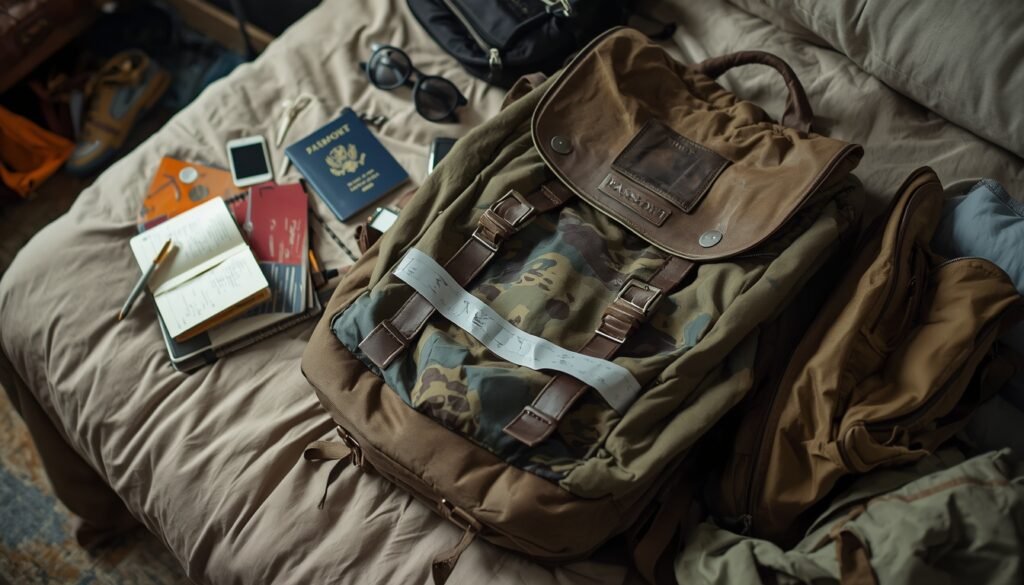
Meanwhile my friend spent $300 on this fancy Osprey pack that everyone on travel forums swears by. Know what happened? The hip strap broke after six months. He had to get it repaired. Cost him $40 and two weeks without his main bag.
I’m not saying expensive travel gear is bad. I’m saying the relationship between price and quality isn’t what travel gear companies want you to think it is. And when you’re trying to travel on a budget, every dollar you overspend on gear is a dollar you can’t spend actually traveling.
Here’s what most travel gear guides get wrong: they’re written by people sponsored by gear companies, or travel bloggers who get free stuff to review, or people who did budget travel maybe five years ago and now make money recommending expensive products. They’ll tell you that you “need” a $200 travel towel or a $150 packing cube system or some $400 ultralight backpack to travel properly.
Complete BS.
I’ve watched broke backpackers travel the world with $50 worth of gear total. I’ve seen digital nomads work from beaches with literally just a laptop and a plastic bag. The gear you actually need for budget travel is way simpler, way cheaper, and way more practical than what gets recommended.
This guide is different. Everything here is based on actually traveling broke, making gear mistakes, figuring out what genuinely matters versus what’s just marketing, and learning what affordable travel gear actually works when you’re on the road constantly. Whether you’re planning your first backpacking trip, trying to travel full-time on a budget like I do, or just trying to pack smarter for weekend trips, this is what you actually need to know about travel gear.
Let me show you what really matters and what’s just expensive BS.
Why Most Travel Gear Advice Is Designed to Make You Overspend
Before we get into specific travel gear recommendations, let’s talk about why so much gear advice is genuinely terrible for budget travelers.
Gear companies make money when you think you need expensive stuff. That $250 “travel system” with matching packing cubes and toiletry bags? You can get the same functionality from $30 worth of stuff from Target or Amazon. But they’ve convinced people that premium travel gear is necessary. It’s not.
Travel influencers get paid to recommend expensive travel gear. Ever notice how every “budget travel” blog somehow recommends a bunch of $100+ items? That’s because they have affiliate deals. They make commission when you buy through their links. So they recommend pricier stuff because the commissions are better, not because the travel gear is better.
“Ultralight” and “technical” are marketing terms more than real categories. Yeah, ultralight travel gear is lighter. But is a 3-pound backpack worth $200 more than a 4-pound backpack when you’re broke? Probably not when that $200 could fund an entire extra week of travel.
The gear review industry doesn’t represent broke travelers. Most reviews compare premium options against each other. They’re not comparing a $300 pack to a $35 pack because that’s “unfair.” But that comparison is literally what budget travelers need to see.
Here’s what I’ve learned about affordable travel gear after years of this: the difference between a $40 backpack and a $250 backpack is way smaller than companies want you to believe. The difference between having no portable charger and having a $20 portable charger is massive. The gear that matters most for budget travel is the stuff that solves actual problems cheaply, not the stuff that’s marginally better for massively more money.
For more budget travel philosophy, check out budget travel tips for digital nomads.
The Backpack Situation (Don’t Overthink This)
Let’s start with the big one: your main bag. This is where people obsess and overspend most on travel gear.
What You Actually Need in Travel Gear Backpacks
40-50 liter capacity is the sweet spot. Big enough for everything, small enough to keep as carry-on on most airlines. Don’t go bigger unless you’re camping constantly.
Durable material that doesn’t rip easily. Nylon or polyester with ripstop is good. You don’t need “military-grade tactical” anything—that’s marketing.
Working zippers. Sounds obvious but cheap zippers fail. YKK zippers are generally reliable even on budget travel gear.
Some water resistance. Doesn’t need to be waterproof, just water-resistant enough for light rain.
Comfortable straps. The actual quality difference here is real. Thin, poorly padded straps on budget travel gear will hurt after a few hours.
My Actual Recommendation for Affordable Travel Gear
If you have $30-50: Get a no-name brand travel backpack from Amazon or AliExpress. Read reviews. Look for YKK zippers. Check that straps have decent padding. I’ve used several $35-45 packs that lasted years as travel gear.
If you have $80-120: The AmazonBasics Carry-On Travel Backpack or similar mid-tier options. Not fancy, but genuinely durable as travel gear.
If you have $150-200: Osprey Farpoint 40 or similar from established brands. This is the premium level for travel gear that’s still reasonable. Don’t go higher unless you’re sponsored or rich.
What I actually use: Currently a $42 no-name backpack from Amazon I bought two years ago. Before that, a different $35 pack that lasted 18 months before a zipper finally gave out. The $35 per 18 months cost of my travel gear is incredibly reasonable.
What You Don’t Need Despite Marketing
You don’t need “anti-theft” travel gear. Those backpacks with hidden zippers and slash-proof material? Unnecessary. Use a $5 padlock on your zippers if you’re worried. Nobody’s slashing backpacks in hostels or airports.
You don’t need travel gear with 47 organizational pockets. More pockets sounds good but makes packing more complicated. Simple main compartment with 2-3 organizational sections is plenty.
You don’t need compression straps and external attachment points everywhere. Unless you’re camping and need to attach tents and sleeping bags, these just add weight and complexity to travel gear.
My travel gear philosophy: buy the cheapest backpack with good reviews, YKK zippers, and padded straps. Use it until it breaks. Then buy another cheap one. Over three years, I’ve spent $77 total on backpacks. People with expensive travel gear have spent $200-400.
Tech Travel Gear That Actually Matters
Tech is where budget travelers can either save or waste tons of money on travel gear. Here’s what genuinely matters:
Portable Power Bank (Essential Travel Gear)
This is non-negotiable travel gear. Your phone dies, you lose maps, communication, everything. A portable charger fixes this for $15-25.
What to get: 10,000-20,000 mAh capacity. Brands like Anker make reliable cheap options. I use an Anker PowerCore that cost $22 three years ago. Still works perfectly as travel gear.
Don’t overpay for: Solar charging (barely works), wireless charging (unnecessary weight), huge 30,000+ mAh sizes (heavy, often not allowed on planes).
Universal Travel Adapter (Required Travel Gear)
You need this if traveling internationally. Don’t buy separate adapters for each country—that’s expensive and annoying.
What to get: A simple universal adapter with USB ports. $12-20 on Amazon. Look for surge protection. EPICKA Universal Travel Adapter is solid budget travel gear.
Don’t fall for: Expensive “smart” adapters with apps and LED displays. Completely unnecessary features on travel gear.
Headphones or Earbuds (Sanity-Saving Travel Gear)
Cheap earbuds are fine for travel gear. You don’t need $200 AirPods. You need something that blocks noise and doesn’t hurt your ears.
Budget options: $20-40 earbuds from Anker, Soundcore, or Skullcandy work great as travel gear. I’ve used $15 earbuds for entire years.
When to spend more: If you work remotely and take lots of calls, decent noise cancellation helps. But even then, $60-80 options work fine. Don’t spend $300+ on travel gear headphones unless you’re rich.
Laptop/Tablet (If You Need It)
Don’t bring expensive travel gear electronics if you don’t need to. Every piece of expensive tech is something to worry about losing or breaking.
If you work remotely: Get a cheaper laptop ($300-600 range) specifically for travel. My travel gear includes a $400 Chromebook that does everything I need. Way less stressful than traveling with a $1200 MacBook.
If you don’t work remotely: You probably don’t need a laptop at all for travel gear. Your phone does 90% of what travelers need. Save the weight.
What Tech Travel Gear You Don’t Need
Kindle/e-reader: Your phone reads books. Is a dedicated e-reader nicer? Sure. Is it $100-150 of necessary travel gear? Not for budget travelers.
Portable WiFi hotspot: Just use your phone’s hotspot or buy local SIM cards. Dedicated hotspot devices are overpriced travel gear.
Travel router: Unless you’re a serious digital nomad with specific VPN needs, skip this travel gear entirely.
Action cameras: Only get this travel gear if you genuinely will use it constantly. Most people take like 20 videos then never touch it again. Your phone camera is probably fine.
For more on essential apps and tools, see best travel apps to save money.
Clothing and “Travel Clothing” (Mostly Marketing)
Here’s where travel gear companies really get people: “technical travel clothing” that supposedly dries faster, wrinkles less, has hidden pockets, etc.
The Truth About Travel Clothing Gear
Most “travel clothing” is overpriced normal clothing with branding. That $80 “travel shirt” from a travel gear company is basically a $15 athletic shirt with a logo.
You don’t need special travel gear clothing. Wear what you already own. Seriously. Athletic wear dries fast, packs small, and costs way less than branded travel gear clothing.
What Clothing Travel Gear Actually Matters
One decent jacket: Not a $300 Arc’teryx thing. A $40-60 water-resistant jacket from sporting goods stores or Amazon. This is practical travel gear.
Comfortable walking shoes: Don’t skimp here. Your feet carry you everywhere. But you also don’t need $180 hiking boots. $60-90 trail runners or walking shoes work great as travel gear.
A few quick-dry shirts: Buy athletic shirts from Target, Walmart, or Amazon. $8-15 each. Same function as $60 “travel shirts” from travel gear brands.
One pair decent pants/shorts: Again, athletic stuff works. I’ve traveled with $22 REI Outlet hiking pants for two years as my main travel gear.
Underwear and socks: ExOfficio makes “travel underwear” everyone recommends. They’re fine. They’re also $20 per pair. Uniqlo Airism is half the price and basically the same. Synthetic athletic socks from any sporting goods store work as travel gear.
What You Don’t Need
Compression shirts/pants: Unless you’re a serious athlete, regular clothes work fine as travel gear.
Convertible pants that zip into shorts: These look terrible and the zippers always break. Just bring pants and shorts.
“Travel blazers” and “dress travel gear”: If you need business clothes, bring one outfit. Don’t buy special travel versions.
15 different quick-dry towels: You need maybe one small towel max. Hostels provide towels. Hotels provide towels. You don’t need a $40 “technical travel towel” as essential travel gear.
My entire clothing travel gear for three years of constant travel cost maybe $150 total. Most of it was bought at outlet stores or clearance sales.
Organization Travel Gear (Simple Is Better)
Packing cubes, compression bags, organizers—there’s infinite organization travel gear marketed to travelers. Most of it is unnecessary.
What Organization Travel Gear Works
One set of basic packing cubes: $15-25 for a set on Amazon. Helps keep stuff organized. Amazon Basics Packing Cubes work fine as travel gear.
Ziplock bags: Free at home, or $2 for a box. Use these for toiletries, organizing cables, keeping things dry. The most versatile travel gear ever.
One small day pack or tote bag: $10-20 foldable daypack from Amazon or outdoor stores. Essential travel gear for daily exploring.
What Organization Travel Gear Is Overpriced
$50 compression packing cubes: Regular packing cubes plus sitting on your bag compresses fine. Save the $35 difference for actual travel.
Specialized toiletry bags with 47 pockets: A $8 simple bag works. Don’t pay $40 for “premium” travel gear toiletry bags.
Cable organizers and tech pouches: Use a Ziplock bag. Works perfectly. $0 versus $25 for fancy travel gear organizers.
Shoe bags: Put shoes in plastic bags from grocery stores. Free travel gear solution.
Safety and Security Travel Gear (Don’t Paranoid-Spend)
Security travel gear is heavily marketed with fear. “Protect your belongings!” “Stay safe!” Most of it’s unnecessary.
Actual Useful Security Travel Gear
A simple padlock or two: $6-10 for decent padlocks. Lock your backpack zippers together. Lock hostel lockers. Simple effective travel gear.
RFID-blocking wallet: Okay, RFID theft is mostly theoretical, but basic RFID wallets cost $10-15 anyway. Fine to get one as travel gear but don’t stress about it.
Security Travel Gear That’s Oversold
Anti-theft backpacks with hidden zippers: $150+ for marginally better security. Your $5 padlock does basically the same thing for travel gear.
Money belts: Uncomfortable and obvious. Most travelers don’t use them. Keep valuables in locked backpack or hidden in regular pockets.
Portable safes and pacsafe bags: If you’re that worried, use hostel lockers or hotel safes. These add weight to your travel gear.
Fake wall outlets with hidden compartments: This is paranoid-level travel gear. Just use the actual hotel safe.
I’ve never been robbed in three years of travel. I use a $7 padlock and keep my valuables in my locked backpack or on me. That’s it for security travel gear. Works fine.
Toiletries and Health Travel Gear (Keep It Minimal)
What You Actually Need
Small refillable bottles: Buy $1 travel-size bottles at drugstores, refill them. Infinite use travel gear.
Basic first aid: Band-aids, pain reliever, anti-diarrheal medication. Maybe $15 worth fits in a Ziplock bag. Essential travel gear.
Sunscreen if you’re going somewhere sunny: Buy locally usually cheaper than bringing travel-size versions.
What’s Overrated Travel Gear
Full toiletry systems with matching bottles: This is lifestyle branding, not necessary travel gear.
Every medication for every situation: Bring basics. Buy stuff locally if needed. Most countries have pharmacies.
Luxury travel-size versions of products: Just refill regular bottles. Same product, way cheaper travel gear approach.
Where to Actually Buy Affordable Travel Gear
Shopping strategy matters as much as what you buy for travel gear.
Amazon – Best for reading reviews and comparing budget travel gear. Look for items with 1000+ reviews.
Sporting goods outlets – REI Outlet, Decathlon, Dick’s Sporting Goods clearance. Great for discounted travel gear.
TJ Maxx, Ross, Marshalls – Hit or miss but sometimes have great travel gear deals on name brands.
AliExpress – If you can wait 2-4 weeks for shipping, crazy cheap travel gear. Quality varies so read reviews carefully.
Walmart, Target – Their athletic and outdoor sections have surprisingly good travel gear basics cheap.
Thrift stores – Especially in wealthy areas. People donate barely-used travel gear constantly.
Facebook Marketplace, OfferUp – Used travel gear from people who stopped traveling.
My approach: I buy most travel gear new from Amazon or sporting goods outlets. I’ve gotten a few things used that work great. I avoid premium travel gear stores unless there’s a major sale.
The Real Cost of My Actual Travel Gear
Let me show you what I actually spend versus what I could’ve spent:
My actual travel gear:
- Backpack: $42
- Power bank: $22
- Universal adapter: $15
- Earbuds: $18
- Packing cubes: $18
- Small daypack: $12
- Padlocks (2): $12
- Water bottle: $8
- Miscellaneous (cables, etc.): $30
- Total: $177
If I’d followed premium travel gear guides:
- Backpack: $250
- Power bank: $60
- Universal adapter: $40
- Earbuds: $150
- Packing cubes: $60
- Daypack: $50
- Anti-theft security gear: $100
- Premium water bottle: $35
- Technical accessories: $80
- Total: $825
That’s $648 saved by buying affordable travel gear instead of premium. That’s enough money for an entire extra month of travel in Southeast Asia. Or 2-3 months in cheap parts of Eastern Europe when you know how to travel Europe on a budget.
Maintaining Your Travel Gear So It Lasts
The best way to keep travel gear affordable is making it last longer.
Clean your stuff. Wipe down backpacks after dusty/dirty trips. Wash packing cubes occasionally. Clean electronics with microfiber cloth.
Fix small problems immediately. Loose strap? Sew it or use safety pins. Small zipper issue? Fix it before it becomes a big problem.
Don’t overstuff backpacks. Easier on zippers and seams. Your travel gear lasts way longer.
Rotate if you have multiples. If you have two backpacks or bags, switching between them extends both’s life.
Store properly when not traveling. Keep travel gear dry, avoid extreme temperatures, hang backpacks instead of crushing them.
My $42 backpack is two years old because I take care of it. People who destroy expensive travel gear in six months aren’t saving money despite buying “better quality.”
Common Travel Gear Mistakes I See Constantly
Buying everything new before first trip. Start with basics. See what you actually use. Buy more as needed. Don’t spend $500 on travel gear before knowing what matters.
Overpacking initially. People bring way too much travel gear for first trip. You need less than you think. Way less.
Not testing travel gear before trips. That new backpack feels fine in the store. Wear it loaded for a day before your trip to check comfort.
Following minimalist extremists. Some travel gear bloggers brag about traveling with like three items total. That’s not practical for most people. Don’t feel pressure to be that extreme.
Buying travel-specific versions of regular items. If a regular version works, use it. You don’t need the travel gear version.
Replacing working travel gear with newer models. Your two-year-old backpack works fine. You don’t need the 2025 model. Marketing wants you to upgrade travel gear constantly.
The Mindset Shift About Travel Gear
Here’s what changed how I think about travel gear: the gear matters way less than the actual traveling.
Nobody remembers their trip because of their amazing backpack. People remember experiences. The $800 you save buying affordable travel gear instead of premium gear funds actual travel—flights, accommodation, food, activities.
Every travel gear purchase should answer: does this solve a real problem I have? If yes, buy the cheapest version that solves it. If no, don’t buy it.
Most travel gear you think you need, you don’t. Most expensive travel gear isn’t significantly better than affordable options. Most travel gear marketing is designed to make you spend more than necessary.
The best travel gear is stuff that’s functional, reliable, and cheap enough that you’re not constantly worried about it. That $35 backpack with duct tape? I genuinely don’t worry about it getting stolen or damaged. It’s done its job a thousand times over.
The person with $5000 worth of premium travel gear isn’t traveling better than the person with $200 worth. They’re just carrying more expensive stuff.
For more on this mindset, see how to manage your finances while traveling.
Your Actual Shopping List for Budget Travel Gear
Okay, you’re starting from zero. Here’s what to actually buy:
Essential travel gear (must-have):
- Backpack 40-50L: $35-50
- Portable charger: $20-25
- Universal adapter: $12-18
- Decent earbuds: $15-25
- Basic packing cubes: $15-20
- Padlock or two: $8-12
- Reusable water bottle: $8-12
- Total: $113-162
Nice to have travel gear (if budget allows):
- Small daypack: $12-20
- Extra charging cables: $8-15
- Travel towel: $8-15
- First aid basics: $10-15
- Total: $38-65
Grand total for complete budget travel gear setup: $151-227
That’s it. That’s everything you genuinely need for travel gear to start traveling comfortably. Everything else is optional or can be bought along the way as needed.
Compare that to the $800-1000+ most travel gear guides recommend spending, and you’ve just saved enough for several months of actual travel.
Frequently Asked Questions About Affordable Travel Gear
What travel gear do I actually need as a budget traveler?
Essential affordable travel gear includes: a 40-50L backpack ($35-50), portable charger ($20-25), universal adapter ($12-18), basic earbuds ($15-25), packing cubes ($15-20), padlocks ($8-12), and a reusable water bottle ($8-12). Total investment: $113-162 for complete budget travel gear setup.
Is expensive travel gear worth the money?
Not usually for budget travelers. A $35-50 backpack with good reviews and YKK zippers performs similarly to $200+ premium options for most travelers. The $150+ price difference could fund an entire extra week of travel. Invest in comfort items like good shoes, but don’t overspend on travel gear marketing hype.
Where can I buy cheap travel gear?
Best sources for affordable travel gear: Amazon (for reviews and comparisons), sporting goods outlets (REI Outlet, Decathlon), discount stores (TJ Maxx, Ross, Marshalls), Walmart/Target athletic sections, and secondhand from Facebook Marketplace or thrift stores. AliExpress offers very cheap travel gear with longer shipping times.
How long does budget travel gear last?
With proper care, budget travel gear lasts surprisingly long. A $35-50 backpack typically lasts 1-2 years of constant travel, portable chargers 2-3 years, and packing cubes indefinitely. The key is buying items with good reviews, YKK zippers, and maintaining your travel gear properly (cleaning, immediate repairs, proper storage).
Do I need technical travel clothing?
No, “technical travel clothing” is mostly marketing. Regular athletic wear from Target, Walmart, or sporting goods stores performs identically to $60-80 branded “travel shirts” at 1/4 the price. Buy quick-dry athletic clothing as affordable travel gear instead of expensive travel-specific clothing brands.
What travel gear should I not cheap out on?
Only two items warrant slightly higher spending in travel gear: comfortable walking shoes ($60-90 instead of $20) and a backpack with padded straps ($40-50 instead of $20). Everything else, buy the cheapest version with good reviews. Your feet and back deserve comfort; other travel gear doesn’t need premium versions.
Can I travel with just a carry-on backpack?
Yes, and it saves money on baggage fees. A 40-50L backpack fits as carry-on on most airlines and holds everything you need for extended travel. Pack versatile clothing, use packing cubes for organization, and do laundry regularly. Traveling with only carry-on is the ultimate affordable travel gear strategy.
Final Real Talk About Travel Gear
Look, you can absolutely travel with premium travel gear if you want and can afford it. I’m not saying expensive stuff is bad. I’m saying it’s not necessary, and it’s definitely not necessary to go into debt or blow your travel fund on.
The travel gear industry wants you to believe that having the right expensive stuff is essential for good travel. It’s not. Some of the best travelers I’ve met had the cheapest travel gear imaginable. Some of the most stressed, uncomfortable travelers had $2000 worth of premium gear.
What actually matters: being flexible, being smart about money, being willing to solve problems creatively. Travel gear is just tools. The cheapest tool that does the job is the right tool when you’re trying to travel on a budget.
So start with the basics. See what you use. See what problems you encounter. Buy solutions as needed. Keep it simple. Keep it cheap. Keep it functional.
Then spend your money on actual travel instead of gear for traveling.
Because honestly? Nobody ever looked back on their travels and thought “man, I wish I’d spent more money on a fancier backpack.” They think “I wish I’d stayed longer” or “I wish I’d done more stuff.”
The gear is just the gear. The travel is what matters.
Now go buy that $35 backpack and book a flight somewhere.
Ready to start traveling without overspending on gear? Get more budget strategies and real travel tactics at XRWXV.com — where broke travelers learn to explore the world with affordable gear and smart planning.